Burton Malkiel, Charles Ellis and Jay Vivian Join Rebalance Investment Committee

Finance Luminaries Bring “Big League” Investment Management to Everyday Investors

Palo Alto, Calif, January 29, 2013 – Three important and respected investment luminaries — Burton Malkiel, Charles Ellis and Jay Vivian — have joined Rebalance’s Investment Committee. Rebalance (www.rebalance-ira.com) manages Individual Retirement Accounts (IRAs) for clients who have accounts as low as $75,000. With an innovative business model that leverages advanced technology, Rebalance provides low-cost, high quality one-on-one retirement advice using sophisticated investment management methods.

Malkiel, Ellis and Vivian are renowned for creating and implementing sophisticated investment methods used today by elite pensions and endowments. Their core ideas include diversifying across multiple types of assets globally and disciplined portfolio rebalancing. They also advocate techniques for keeping investment fees extremely low. These ideas are the basis for the unique service that Rebalance is now bringing to all investors. The Investment Committee develops, oversees, and sets policies for the portfolios offered to Rebalance clients.

Mr. Malkiel is an emeritus Princeton University economics professor and former board member of Vanguard Group who wrote the classic investment book, “A Random Walk Down Wall Street.” Mr. Ellis, also a former board member of Vanguard Group, was trustee of Yale University where he chaired the investment committee, overseeing the famed Yale Endowment from 1999 to 2008 and has taught the investment management course at Harvard Business School. Jay Vivian was formerly Managing Director of IBM’s Retirement Funds, responsible for $135 billion in IBM investment funds for more than 400,000 employees worldwide.

“It is a privilege to be the advisory firm that provides access to Burt, Charley and Jay’s ‘common sense’ judgment to millions of investors,” said Mitch Tuchman, managing director of Rebalance. “Because of our focus on IRAs, and our model of providing personalized service, we hope to have a positive impact on helping many Americans retire with more.”

Passionate educators, these men have written extensively about how current financial services practices work against most investors. One critical flaw they have noted is that few investors are being advised by experts to own a low-cost and globally diversified portfolio that is periodically rebalanced. They joined the Rebalance Investment Committee to bring these investment methods to a larger group of Americans saving for retirement.

“There is nearly $5 trillion invested in IRAs,” said Mr. Malkiel. “It is a stunning number, and an area where investors do not get enough help or support. If IRAs generated the returns of well-managed pensions, Americans would be earning an additional $125 billion a year. The fact that this doesn’t happen is shameful. IRAs are the pensions for this generation. It’s crucial that everyday investors get good, objective advice, since retirement now can easily last 20 years or more,” he added.

“With ballooning deficits, the government can ill afford to help.” said Mr. Ellis. “Add to that the low returns in IRAs, and we are starting to create a societal problem as baby-boomers double the ranks of the retired over the next two decades. If IRAs were well-managed and their fees were kept low, Americans would feel more secure about having enough money to retire.”

Added Mr. Vivian: “Until the mid-1970’s, most working Americans had a pension plan managed by a professional investment expert. Today, most people have to manage their own retirement accounts and they don’t get proper guidance, so their returns suffer. It is the everyday investor who needs more help than ever, and that’s why we have joined the Rebalance Investment Committee – to help people retire with more,” explained Mr. Vivian.

“The finance industry’s high cost structure makes it difficult to offer personalized advice to the everyday retirement investor. We have assembled leading technology innovations to make Burt, Charley and Jay’s methods widely available,” said Scott Puritz, managing director, Rebalance.

About Rebalance

Rebalance is an SEC Registered Investment Advisor that manages client IRA accounts as low as $75,000 at Charles Schwab and Fidelity. With an innovative business model that leverages advanced technology, Rebalance provides low-cost, high quality one-on-one retirement advice using sophisticated investment management methods. For more information, visit www.rebalance-ira.com.

For the press: Press kit materials are available at http://www.rebalance360.com/press-downloads/

Finding Investment Advice for More Modest Retirement Accounts

But the majority of people — maybe the vast majority — are not like that. They may be smart enough to do the right thing, in theory, but they forget or slip up or are taken in by well-meaning friends bearing stock tips or annuity-peddling scoundrels who make nice to them over free steak dinners.

On Friday, the latest entrant in an increasingly crowded field of services trying to serve this customer is introducing its offering, which is called Rebalance. As the name suggests, it exists only to help you with your Individual Retirement Account, perhaps one that you’ll fill with money that’s been sitting around in several 401(k) or similar accounts at previous employers.

Rebalance representatives will talk with you about your goals, invest your money in a low-cost collection of index fundlike exchange-traded funds that don’t try to make big bets on individual stocks, and rebalance the investments when necessary. In exchange, you agree to hand over one half of 1 percent of your assets each year, with a minimum annual fee of $500.

The company’s single-minded focus on retirement savings is somewhat narrow, but it makes sense given how much money is at stake and how badly many people mess things up when they do it on their own.

There is more money in I.R.A.’s than in any other type of retirement vehicle, according to estimates from the Investment Company Institute. I.R.A. balances totaled $5.3 trillion at the end of the third quarter of 2012. That’s more than the $5 trillion in 401(k), 403(b) and other similar plans; the $4.8 trillion in government retirement plans; and the $2.6 trillion in traditional pensions.

According to the Department of Labor, the professionals who run pension plans earned an 8.3 percent annual return from 1991 to 2010. People fending for themselves in 401(k) and similar plans earned 7.2 percent. Nationwide I.R.A. performance figures are more scarce, though one 2006 study by the Center for Retirement Research put the figure for 1998 to 2003 at 3.8 percent annually, roughly 2 to 3 percentage points worse than pension fund managers and 401(k) investors did during that same period.

These numbers are a bit squishy, given that pensions often make bets in markets that 401(k) investors can’t access and the high fees that many 401(k) participants pay that pension managers don’t. Still, there are about a thousand reasons plenty of do-it-yourselfers (who, after all, did not volunteer to manage their retirement money) would be likely to get worse returns than, say, pension managers.

To start with, large numbers of people make extreme bets. At Vanguard, 10 percent of retirement plan participants invested only in stocks in 2011, while 8 percent had no stocks at all. At least this is better than 2004, when 35 percent of its customers were that far out of balance. Then, there are the emotional challenges. To stick with the mix of investments you’ve selected, you need to sell things that have done well and buy investments that have lagged recently. That’s hard to do.

Then there’s the grab bag of other feelings. The bad experience with a broker you may have had in the past. The spouse who may scold you for doing the wrong thing. The fear that may have caused you to bail out in early 2009 or the greed that has you pouring money into stocks today, now that they’re looking up again. This can be intensely hazardous to your long-term financial health.

All of this should be self-evident, but because we’re playing on the field of emotions, it isn’t. Still, it wasn’t immediately obvious to Mitch Tuchman, the man behind Rebalance, who started a service for do-it-yourself index investors called MarketRiders in 2008.

A former software entrepreneur, Mr. Tuchman had a midlife conversion to passive investing and not trying to beat the market, and he wanted to help others invest in the same way. “We thought we could build such great software that we could turn everyone into a do-it-yourselfer,” he said. “And people said they didn’t have time or they didn’t care to do it themselves.”

MarketRiders charges subscribers $150 a year for instructions on how to adjust their portfolios and when, and it will continue to exist. But Mr. Tuchman, who had also started managing millions of dollars on the side for friends and family who simply could not be bothered to do it themselves, eventually realized that his sideline was where the real mass-market opportunity lay.

So why would you let this guy handle your money? It’s a perfectly reasonable question, and plenty of start-ups in the money management space don’t do a particularly good job of answering it.

“It’s surprising to me how many entrepreneurs go on and on about the lack of trust in big financial institutions,” said Grant Easterbrook, a senior research associate at Corporate Insight who published a guide this week to money management start-ups. “But they’re not putting forward the people behind the product who actually make the investment decision. Who am I trusting if the euro breaks up or we mint a trillion-dollar coin?”

Mr. Tuchman has anticipated this concern and he and his co-founder, Scott Puritz, rounded up an investment advisory board that includes Burton G. Markiel, the emeritus Princeton economics professor who wrote “A Random Walk Down Wall Street” among other books; Charles D. Ellis, author of “Winning the Loser’s Game” and a former Vanguard board member; and Jay Vivian, who once ran I.B.M.’s retirement plans.

The group has created a collection of investment portfolios, most of which have a slight tilt toward small stocks, which tend to outperform the overall stock market over time. Many of the portfolios are also currently spiced up with indexed investments in high-dividend stocks and emerging market bonds.
Besides the annual fee based on assets, there’s a $250 fee to get started, and you must move your I.R.A. accounts to Schwab or Fidelity if they’re not already there.

Mr. Malkiel, who describes himself as the informal investment adviser to Princeton widows, will not be talking to you on the phone, alas. That task falls to Rebalance staff. Mr. Tuchman is looking to hire a few more, including emotionally intelligent M.B.A. types with some finance in their background who may have been home with children the last few years and want to get back into the work force. Customers will be able to speak with them via videoconference and talk to the same person each time.

Neither these workers nor Rebalance earns any fees from the companies that provide the investments. All of Rebalance’s revenue will come from its customers, and as a registered investment adviser, Rebalance is legally bound to act in those customers’ best interest.

There are other, cheaper ways to find someone to put your money in a portfolio like those at Rebalance and run the money for you (though Mr. Tuchman insists that his service will offer more human contact). A company called Wealthfront, which has also put Mr. Malkiel to work, will do something similar for about 0.25 percent annually.

Investors at Betterment, which slashed its prices last year, now pay about 0.30 percent on average, and the company has taken in nearly $100 million since it cut its fees. People with more than $100,000 invested there pay only 0.15 percent annually and can get advice from the founder himself, Jon Stein.

Still, he said that not many people had sought him out and even then it was usually just to make sure they were on track with their goals.

“Most situations are well-handled by software,” he said. “In the long term, that’s going to be the way most people get their advice. We’re replacing the investment adviser with software.”

That’s a pretty bold statement, and the big online brokers don’t necessarily see it that way. “Most people don’t sign off $50,000 of savings without talking to somebody, looking someone in the eye,” said Lule Demmissie, managing director of investment products and retirement for TD Ameritrade, who oversees its Amerivest line of managed portfolios. “We’ve found that it’s a necessary part of the process.”

Mr. Tuchman agrees. But he’s betting that his portfolios and service can be as good as what TD Ameritrade, Schwab, Vanguard and Fidelity offer, without charging quite so much for it.

Even if he fails, someone else is going to seize on the formula and succeed with it. Good investment advice costs too much, and not enough people with under $1 million to invest end up with decent guidance. My bet is that the online brokers’ prices will look a lot more like Mr. Tuchman’s or Mr. Stein’s before long.

Investment Management Fees Are (Much) Higher Than You Think

Although some critics grouse about them, most investors have long thought that investment management fees can best be described in one word: low. Indeed, fees are seen as so low that they are almost inconsequential when choosing an investment manager. This view, however, is a delusion. Seen for what they really are, fees for active management are high—much higher than even the critics have recognized.

When stated as a percentage of assets, average fees do look low—a little over 1% of assets for individuals and a little less than one-half of 1% for institutional investors. But the investors already own those assets, so investment management fees should really be based on what investors are getting in the returns that managers produce. Calculated correctly, as a percentage of returns, fees no longer look low. Do the math. If returns average, say, 8% a year, then those same fees are not 1% or one-half of 1%. They are much higher—typically over 12% for individuals and 6% for institutions.

But even this recalculation substantially understates the real cost of active “beat the market” investment management. Here’s why: Index funds reliably produce a “commodity product” that ensures the market rate of return with no more than market risk. Index funds are now available at fees that are very small: 5 bps (0.05%) or less for institutions and 20 bps or less for individuals. Therefore, investors should consider fees charged by active managers not as a percentage of total returns but as incremental fees versus risk-adjusted incremental returns above the market index.

Thus (correctly) stated, management fees for active management are remarkably high. Incremental fees are somewhere between 50% of incremental returns and, because a majority of active managers fall short of their chosen benchmarks, infinity. And when market returns are low, as in recent years, management fees eat up even more of an investor’s return. Are any other services of any kind priced at such a high proportion of client-delivered value? Can active investment managers continue to thrive on the assumption that clients won’t figure out the reality that, compared with the readily available passive alternative, fees for active management are astonishingly high?

Fees for active management have a long and interesting history. Once upon a time, investment management was considered a “loss leader.” When pension funds first mushroomed as “fringe benefits” during the post–World War II wage-and-price freeze, most major banks agreed to manage pension fund assets as a “customer accommodation” for little or no money—that is, no explicit fee. With fixed-rate brokerage commissions, the banks exchanged commissions for cash balances in agreed proportions. The brokers got “reciprocal” commission business, and the banks got “free” balances they could lend out at prevailing interest rates. In the 1960s, a few institutional brokerage firms, including DLJ, Mitchell Hutchins, and Baker Weeks, had investment management units that charged full fees (usually 1%) but then offset those nominal fees entirely with brokerage commissions.

When the Morgan Bank took the lead in charging fees by announcing institutional fees of one-quarter of 1% in the late 1960s, conventional Wall Street wisdom held that the move would cost the bank a ton of business. Actually, it lost only one account. Thus began nearly a half century of persistent fee increases, facilitated by client perceptions that fees were comfortably exceeded by incremental returns—if the right manager was chosen. Even today, despite extensive evidence to the contrary, both individual and institutional investors typically expect their chosen managers to produce significantly higher-than-market returns. That’s why fees have seemed “low.”

A relatively minor anomaly is getting more attention: While asset-based fees have increased substantially over the past 50 years—more than fourfold for both institutional and individual investors—investment results have not improved for many reasons. Changes in the equity market have been substantial, particularly in aggregate. Over the past 50 years, trading volume has increased 2,000 times—from 2 million shares a day to 4 billion—while derivatives, in value traded, have gone from zero to far more than the “cash” market. Institutional activity on the stock exchanges has gone from under 10% of trading to over 90%. And a wide array of game changers—Bloomberg, CFA charterholders, computer models, globalization, hedge funds, high-frequency trading, the internet, and so on—have become major factors in the market.

Most important, the worldwide increase in the number of highly trained professionals, all working intensely to achieve any competitive advantage, has been phenomenal. Consequently, today’s stock market is an aggregation of all the expert estimates of price-to-value coming every day from extraordinary numbers of hardworking, independent, experienced, well-informed, professional decision makers. The result is the world’s largest ever “prediction market.” Against this consensus of experts, managers of diversified portfolios of publicly traded securities who strive to beat the market are sorely challenged.

If the upward trend of fees and the downward trend of prospects for beat-the-market performance wave a warning flag for investors—as they certainly should—objective reality should cause all investors who believe investment management fees are low to reconsider.1 Seen from the right perspective, active management fees are not low—they are high, very high.

Extensive, undeniable data show that identifying in advance any one particular investment manager who will—after costs, taxes, and fees—achieve the holy grail of beating the market is highly improbable. Yes, Virginia, some managers will always beat the market, but we have no reliable way of determining in advance which managers will be the lucky ones.

Price is surely not everything, but just as surely, when analyzed as incremental fees for incremental returns, investment management fees are not “almost nothing.” No wonder increasing numbers of individual and institutional investors are turning to exchange-traded funds and index funds—and those experienced with either or both are steadily increasing their use of them.

Meanwhile, those hardworking and happy souls immersed in the fascinating complexities of active investment management might well wonder, Are we and our industry-wide compensation in a global bubble of our own creation? Does a specter of declining fees haunt our industry’s future? I believe it does, particularly for those who serve individual and institutional investors and continue to define their mission as beat-the-market performance.

Notes
1. The announcement in February by the U.S. Labor Department that it will require more disclosure of fees to 401(k) sponsors and participants may help some investors do so.

Liability driven investing explained by Jay Vivian of IBM retirement funds

But LDI is not a free lunch, you can lose a ton of money on it, and as they say, it has a lot of hair on it. Here are a dozen not-so-basic considerations that really should be thought through if you want to do LDI right:

#1) Make sure you’re using LDI for the right reasons and communicating and documenting those reasons. Doing it just to reduce the likelihood of big future contributions could be questionable, because that could be interpreted as a plan sponsor consideration not “solely in the interest of the participants and beneficiaries,” as required by ERISA. Better to use LDI to improve the future ability of the plan to pay benefits. Similar outcome, but an important distinction your lawyer will appreciate.

#2) LDI needs to be an integral part of your investment strategy, not an add-on. It needs to be evaluated in a full asset liability model (ALM) context. Not all ALM providers are equally capable, so make sure yours does it right. You can include predefined triggers to change hedge parameters (aka dynamic asset allocation) as part of this, but they need to be part of the strategies your ALM tests, not just add-ons.

Also: Make sure your ALM inputs and outputs are properly specified. Understand your time horizon really well—it’s great to say you’re a long-term investor, but if your CFO is checking funded-ness quarterly, I doubt you actually are. Inflation should be an independent variable from your other rate specifications. Explore in detail how your liabilities are valued. Make sure your LDI instruments are properly valued by the model. Be very crisp on your objective functions—consistent with #1 above, I’m partial to measures that reflect your ability to pay benefits in very poor market conditions, e.g. during a 1-in-50 downside event. (Avoid identifying an event as “worst case”—do not use this phrase, especially when presenting to senior management. There’s no such thing, and using this phrase gives people (maybe even you) a false sense of security. You imagine you’ve bounded your possible downside, and you haven’t.)

#3) Carefully consider how hedged you want to be. For several reasons, it may not be 100%. For one, your forecast of the correlation between stocks and bonds may impact it, because that helps determine how much hedge your stocks might provide. It’s not intuitive, but the farther away from 0.00 your stock-bond correlation, the more or less your stocks might hedge you. As in #2 above, look at this holistically. When you’re doing LDI, spend extra time on this correlation—that single input can drive big program size changes.

#4) In line with ensuring that your ALM is holistic, it’s particularly important with LDI to look at your true, comprehensive liabilities. You might think this is the number in your annual report, but it may not be. Look your actuary in the eye and say, “Forget the regulatory reporting—what’s your absolute best guess as to what benefit checks we’ll end up writing over the next 50 years based on everything you know about us today?”

Include your best guess on salary growth, population growth (if relevant), and pension increases you might give retirees. You may not be committed to give increases, but are you sure your plan sponsor won’t give one if inflation is 10%+ for a couple of years like it was around 1980? What if retirees are picketing headquarters saying that their purchasing power has dropped 30%? If you’re a union plan, have you included increases beyond those in your current contract? And, don’t forget, cash balance plans accrue even if closed and frozen.

#5) I’m not a market timer, but timing is everything. Interest rates are at historic lows and “can’t go any lower.” If they really can’t go lower, is this the time to put on positions that could cost huge amounts of money if they go up? If rates do go back up (and they probably will, someday) everyone will remember (true or not) that they predicted it and that no one (especially you) would listen. Don’t aggressively champion interest-rate hedging when rates are as low as they are. There are good reasons to do LDI, but they need to be agreed on by the entire organization with a comprehensive understanding of the broad context of the decision.

#6) Ensure you manage regret risk.You (and your management) might think you understand that LDI is a balance of risk and return, but consider a +300 basis point rate move. That’s great news because your liabilities collapse, right? But how’s that going to play with the new CFO who wasn’t in on the LDI implementation? Yeah, you’ll tell her the program behaved like it was supposed to, but when you have to pay Wall Street swap counterparties 25% of the value of your fund because you had that damn LDI hedge on, will she sign the checks quietly? Maybe, maybe not. Be sure to explicitly discuss what happens, in dollar terms, if rates rise a lot. Make sure all the senior players understand that writing big checks is not unlikely. Make sure this gets into your committee meeting minutes. Brief new executives as soon as possible.

#7) Be clear in advance how you’ll benchmark LDI. Any investment program should have a crisp, clear benchmark. Hopefully, your record keeper is already providing total fund return and a total fund benchmark. After you implement LDI, will it be included in both? How will they be calculated? If you’ll leg into LDI, how will you leg into your benchmark? This is messy and can be hard to do and to explain. If it’s liability based (and that’s what the “L” in LDI stands for, right?), how and when will your benchmark constructor get liability info, and from whom? These are not easy questions.

#8) Be clear in advance on how you’ll rebalance. Adding LDI investments typically adds at least one degree of freedom that can really complicate rebalancing, and it can create big liquidity problems.

#9) Speaking of that, think long and hard about liquidity. In normal times, this may not be an issue, but in abnormal times, it can be a very serious one. Things can look good overall if rates rise: liabilities sink, you’re looking nicely funded, but where will you raise the cash to pay your LDI bills? Remember: Everyone else with LDI is in the same boat, trying to sell the same stuff you are to pay their LDI bills.

#10) Take great care if you’re using ISDA or similar agreements. If you don’t know what an ISDA is, thank your lucky stars, unless you’re using them without knowing what they are, in which case you should leave town. Don’t let your counterparties draft your T’s&C’s “as a favor to you”—hire specialized, experienced (which equals expensive) counsel to do this for you. Be sure you and your team are capable of making the rapid-fire complex decisions that will come in a crisis. Consider hiring someone non-conflicted to do it for you.

#11) Along the same lines, ensure that you have sufficient, capable staff for LDI. You might not want to use your bond team for this. They may not fully understand pension liabilities, inflation, accounting, and liquidity—and if you have an LDI crisis, they’ll be severely distracted by the impacts the same crisis will create in their day jobs.

#12) Governance and communications are very important in LDI. This includes ensuring that your management is involved in strategy development, documentation, implementation, oversight, and updates. It includes briefing new members of management as soon as they come on board with what plans you have in place. It includes good minutes of committee meetings discussing LDI, especially those discussing large cash outflow and/or trigger scenarios. It includes reviews, at least annually.

So there’s some of the hair on the LDI process—maybe even a hairball’s worth. If you’re thoughtful and cautious, you should make it through. Good luck.

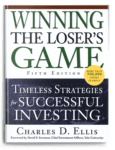
Read Winning the Loser's Game by Charley Ellis

“The best book about investing? The answer is simple: Winning the Loser’s Game. Using compelling data and pithy stories, Charley Ellis has captured beautifully in this new and expanded edition of his classic work the most important lessons regarding investing…it’s a must-read!”
F. William McNabb III, CEO, Vanguard

Burt Malkiel time-tested retirement investing advice

The Time-Tested Strategy for Successful Investing.

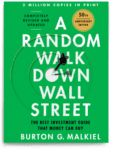
In a time of market volatility and economic uncertainty, when high-frequency traders and hedge-fund managers seem to tower over the average investor, Princeton University Professor Burton G. Malkiel’s classic and gimmick-free investment guide is now more necessary than ever. Rather than tricks, what you’ll find here is a time-tested and thoroughly research-based strategy for your portfolio. Whether you’re considering your first 401(k) contribution or contemplating retirement, this fully updated edition of A Random Walk Down Wall Street should be the first book on your reading list.

In A Random Walk Down Wall Street you’ll learn the basic terminology of “The Street” and how to navigate it with the help of user-friendly, long-range investment strategy that really works. Drawing on his own varied experience as an economist, financial adviser, and successful investor, Malkiel shows why an individual who buys over time and holds a low-cost, internationally diversified index of securities is still likely to exceed the performance of portfolio carefully picked by professionals using sophisticated analytical techniques.

In this new edition, now 50 years on and many market cycles wiser, Malkiel provides valuable new material throughout the book, including advice on using low cost exchange-traded funds, an updated critique of meme stocks and the cryptocurrency bubble, and an authoritative assessment of the latest trends in behavioral finance.

On top of all this, the book’s classic lifestyle guide to investing, which tailors strategies to investors of any age, will help you plan confidently for the future. You’ll learn how to analyze the potential returns, not only for basic stocks and bonds but for the full range of investment opportunities, from money-market accounts and real estate investment trusts to insurance, home ownership, and tangible assets such as gold and collectibles. Throughout the book, individual investors of every level of experience and risk tolerance will find the critical facts and step-by-step guidance they need to protect and grow their hard-earned dollars.

With the prevailing wisdom changing on an almost daily basis, Malkiel’s reassuring and vastly informative volume remains the best investment guide money can buy.


REVIEWS:

“Do you want to do well in the stock market? Here’s the best advice. Scrape together a few bucks and buy Burton Malkiel’s book. Then take what’s left and put it in an index fund.”

—LOS ANGELES TIMES

“Talk to 10 money experts and you’re likely to hear 10 recommendations for Burton Malkiel’s classic investing book.”

—WALL STREET JOURNAL

“Not more than half a dozen really good books about investing have been written in the past fifty years. This one may well belong in the classics category.”

—FORBES

A Random Walk has set thousands of investors on a straight path since it was first published in 1973. Even if you read the book then or more recently, a refresher course is probably in order…. A lucid mix of the theoretical and the pragmatic.”

—CHICAGO TRIBUNE

“Almost every list of must-read investment books… includes Malkiel’s Random Walk.”

—BOOKLIST

“If one of your New Year’s resolutions is to improve your personal finances, here’s a suggestion: Instead of picking up one of the scores of new works flooding into bookstores, reread an old one: A Random Walk Down Wall Street.”

—NEW YORK TIMES

“An engagingly written and wonderfully argued tome.”

—MONEY

“Imagine getting a week-long lesson on investing from someone with the common sense of Benjamin Franklin, the academic and institutional knowledge of Milton Friedman and the practical experience of Warren Buffett. That’s about what awaits you in the latest edition of this must-read by Burton Malkiel.”

—BARRON’S

“A must-read for any investor.”

—BROWSER

About the Author:

Dr. Burton G. Malkiel is the Chemical Bank Chairman’s Professor of Economics Emeritus at Princeton University. He is a former member of the Council of Economic Advisers, dean of the Yale School of Management, and has served on the boards of several major corporations, including Vanguard and Prudential Financial. He is on the Rebalance Investment Committee.

A prolific author and highly respected voice in the investment industry, Professor Malkiel has written hundreds of scholarly articles and opinion pieces in publications such as The Financial Times, The New York Times, and The Wall Street Journal, and has authored 17 books. Despite his myriad accomplishments and professional experiences, there has been one unwavering constant in Dr. Malkiel’s career: his passionate belief that the power and efficiency of low-cost, diversified, and well-balanced index-based investing should be available to all American families, regardless of income or economic status. It was this passion that led him to write A Random Walk Down Wall Street five decades ago, and it is the same passion that makes him a critical member of the Rebalance team today.

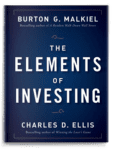
Read The Elements of Investing by Charley Ellis

Authors Charles Ellis and Burton Malkiel, two of the investment world’s greatest thinkers, have combined their talents to produce The Elements of Investing—a short, straight-talking book about investing and saving that will put you on a path towards a lifetime of financial success.

Charley Ellis explains investing in the Financial Analysts Journal

Everyone likes to succeed in investing. Millions of investors depend on investment success to assure their security in retirement, to provide for their children’s education, or to enjoy better lives. Schools, hospitals, museums, and colleges depend on successful investing to fulfill their important missions. As investment professionals, when the services we offer help investors achieve their realistic longterm objectives, ours can be a noble profession.

The accumulating evidence, however, compels recognition that investors are suffering serious shortfalls. Part of the problem is that investors make mistakes. But they are not alone. As investment professionals, we need to recognize that much of the real fault lies not with our clients but with ourselves—the unhappy consequence of three major systemic errors. Fortunately, we can—and so should—make changes to help ensure investing is, both for our client investors and for ourselves, truly a winners’ game.

For all its amazing complexity, the field of investment management really has only two major parts. One is the profession—doing what is best for investment clients—and the other is the business— doing what is best for investment managers. As in other professions, such as law, medicine, architecture, and management consulting, there is a continuing struggle between the values of the profession and the economics of the business. We must be successful at both to retain the trust of our clients and to maintain a viable business, and in the long run, the latter depends on the former. Today, investment management differs from many other professions in one most unfortunate way: We are losing the struggle to put our professional values and responsibilities first and our business objectives second.

We can stop losing the struggle if we redefine our mission to emphasize the investment counseling values of our profession—and our understanding of investors and investing—to help clients focus on playing the investment game that they can win and that is worth winning. Fortunately, what is good for our professional fulfillment can, in the long run, be good for business.

While the investment profession, like all learned professions, has many unusually difficult aspects that require great skill and is getting more complex almost daily, it too has just two major parts. One part is the increasingly difficult task of somehow combining imaginative research and astute portfolio management to achieve superior investment results by outsmarting the increasingly numerous professional investors who now dominate the markets and collectively set the prices of securities. Always interesting, often fascinating, and sometimes exhilarating, the work of competing to “beat the market” has been getting harder and harder and has now become extraordinarily difficult. Most investors are not beating the market; the market is beating them.

Difficulty is not always proportional to importance. In medicine, simply washing one’s hands has proven to be second only to penicillin in saving lives. Fortunately, the most valuable part of what investment professionals do is the least difficult: investment counseling. As experienced professionals, we can help each client think through and determine the sensible investment program most likely to achieve his or her own realistic long-term objectives within his or her own tolerance for various risks—variations in income, changes in the market value of assets, or constraints on liquidity. Then, we can help each client stay with that sensible investment program, particularly when markets seem full of exciting, “this time it’s different” opportunities or fraught with disconcerting threats.1 Success in this work is not simple or easy but is much easier than success in investment management, and with the new tools available to investment professionals,2 it is getting easier even as performance investing is getting steadily harder.

Three Errors

With remarkable irony, those of us devoting our careers to investment management have unintentionally created for ourselves three problems. Two are errors of commission with increasingly serious consequences. The third is an even graver error of omission. Unless we change our ways, this troika of errors will harm the profession that has been so intellectually and financially rewarding to so many of us. Let me first explain each error in turn and then propose the best solution.

Error 1. Falsely Defining Our Mission.

The first error is that we have falsely defined our professional mission to our clients and prospective clients as “beating the market.” Fifty years ago, those taking up that definition of mission had reasonable prospects of success. But those years are long gone. In today’s intensively competitive security markets, few active managers outperform the market by even 1 percent over the long term, most managers fall short, and in terms of magnitude, underperformance substantially exceeds outperformance. In addition, identifying the few managers who will be the future “winners” is notoriously difficult, and the rate of subsequent failure among one-time “market leaders” is high.

Truly massive changes have transformed the markets and investment management so greatly that for most investors, beating the market is no longer a realistic objective, as more and more of us are recognizing. Here are some of the changes that over 50 years have compounded to convert active investing into a loser’s game:

  • NYSE trading volume is up over 2,000 times—from about 2 million shares a day to about 4 billion. Other major exchanges around the world have seen comparable changes in volume.
  • The mix of investors has changed profoundly— from 90 percent of total NYSE listed “public” trading being done by individuals to 90 percent being done by institutions. And anyone with a long memory will tell you that today’s institutions are far bigger, smarter, tougher, and faster than those of yore.
  • Concentration is extraordinary: The 50 most active institutions do 50 percent of all NYSE listed stock trading, and the smallest of these 50 giants spends $100 million annually in fees and commissions buying services from the global securities industry. Naturally, these institutions get the “first call.”
  • Derivatives have gone in value traded from nil to larger than the cash market.
  • Nearly 100,000 analysts—up from zero 50 years ago—have earned CFA charters and another 200,000 are candidates, led by those in North America, China, and India.
  • Regulation Fair Disclosure, commonly known as Reg FD, has “commoditized” most investment information now coming from corporations.
  • Algorithmic trading, computer models, and numerous inventive quants are all powerful market participants.
  • Globalization, hedge funds, and private equity funds have all become major forces for change in the security markets’ competitive intensity.
  • Bloomberg, the internet, e-mail, and so forth have created a technological revolution in global communications. We really are “all in this together.”
  • Investment research reports from major securities firms in all the major markets around the world produce an enormous volume of useful information that gets distributed almost instantly via the internet to tens of thousands of analysts and portfolio managers around the world who work in fast-response decision making organizations.

As a result of these and many other changes, the stock markets—the world’s largest and most active “prediction markets”—have become increasingly efficient. So, it is harder and harder to beat the smart, hard-working professionals—with all their information, computing power, and experience— who set those market prices. And it’s much, much harder to beat the market after costs and fees. That is why, among mutual funds, the approximate proportion, net of fees, typically falling behind the market averages has become 60 percent in any 1 year, 70 percent over 10 years, and 80 percent over 20 years.

Sadly, most descriptions of “performance” do not even mention the most important aspect of all investing: risk. So, it is important to recall that the “losers” underperform the market by twice as much as the “winners” outperform. Nor do the data adjust for taxes, particularly the high taxes on short-term gains that come with the now normal 100 percent portfolio turnover. Finally, of course, performance for funds is usually reported as time weighted, not value weighted, so the reported data do not show true investor experience. That can only be shown with the value-weighted record of how real investors fare with their real money. This is not a pretty picture.

Nor is it comforting to see the details of how clients—both individuals and institutions—turn negative toward their investment managers after a few years of underperformance and switch to managers with a “hot” recent record, positioning themselves for another round of buy-high, sell-low dissatisfaction and obliterating roughly one-third of their funds’ actual long-term returns. (Individuals who actively manage their own investments, notoriously , do even worse.) Unfortunately , this costly behavior is encouraged by investment firms that, to increase sales, concentrate their advertising on funds selected clearly because their recent results—over selected time periods—make good results look even “better.” And some fund managers have several hundred different funds, apparently so that they will always have at least some “documented winners.”

In hiring new managers, individual investors notoriously rely on past performance even though studies of mutual funds show that for 9 out of 10 deciles of past performance, future performance is virtually random. (Only one decile’s past results have predictive power: the worst or 10th decile— apparently because only high fees and chronic incompetence have a reliably repetitive impact on a manager’s results.) The sad result is that investors—both institutional and individual— time and again buy after the best results and sell out after the worst is over. Although 83 percent of plan sponsor investment committees rate themselves “above average” on investment expertise, ironically, the average managers they fire actually achieve slightly higher returns over the next few years than the average managers they hire. And the investment products that institutions move out of proceed to outperform the products they move into. This behavior is costly.

Clients may well ask, “How can this be? Didn’t our consultants’ presentation show that the managers they recommend usually outperform their benchmarks? So shouldn’t their managers be earning something above the market even after fully adjusting for risk?” Unfortunately for those holding this hopeful view, the data usually shown by many consultants are flawed. By simply removing two biases in the “data” as conventionally presented— backdating and survivor bias—the apparent record on managers monitored by consultants often shifts down from “better-than-the-market” appearances to “below-the-market” realities. Even large and sophisticated institutions should know who is watching the watchmen.

The grim reality of our first error of commission is that we continue selling what most of us have not delivered and, realistically, will not deliver: beat-the-market investment performance. Most investors have not yet caught on to the fact that they would be better off if they put most of, if not all, their investments in low-cost index funds or index-matching exchange-traded funds, but that is not the strong “protective moat” against competition that Warren Buffett looks for in a business. One reason investors have not caught on is a major misunderstanding regarding fees.

The Reality of Fees. Most investors still do not realize that investment management fees are not low. Fees are actually very high when seen for what they really are. A fee of 0.5 percent—when measured as a percentage of the client’s own assets—is surely more than 5 percent of the client’s probable average annual returns. Because investors can get virtually guaranteed market returns through index funds for less than 10 bps, what they really “buy” when retaining active managers is risk-adjusted incremental returns. Calibrated as a percentage of risk-adjusted incremental returns, investment management fees are not low; they are high. After 50 years of fee increases, overall investment management fees are now greater than the risk-adjusted incremental returns. This means that investment managers now charge clients more than 100 percent of the benefits actually produced. This stark reality is surely one strong reason for redefining our professional proposition to our clients with due deliberate speed.

Our Best Opportunity. When they have earned the trust and confidence of their clients, investment counselors can add far more to clients’ long-term returns than portfolio managers can hope to produce. This is not a “snap” solution: Effective investment counseling takes time, knowledge of the complexities of markets, investing, and investors, and hard work. But it can be done and can be repeatedly done well. Successful counselors will help each client understand the risks of investing, set realistic investment objectives, be realistic about saving and spending, select the appropriate asset classes, allocate their assets appropriately, and most importantly, not overreact to market highs or lows. Counselors can help their clients stay the course and maintain a long-term perspective by helping them understand what managers are intending to achieve over the long term, understand the predictably disconcerting market turbulence, and be confident that reasonable long-term investment results will reward their patience and fortitude.

Error 2. Incorrectly Ordering Our Priorities.

Our second error of commission is that we have allowed the values of our profession to become increasingly dominated by the economics of our business. This may be most evident on a personal level. We should candidly ask ourselves, Who would deny the obvious delights of affluence? Our crowd, compared with 50 years ago, live in nicer homes, drive fancier cars, take more interesting vacations, and decorate our larger homes and offices with more remarkable paintings and sculptures. Private planes and “name-it-for-me” philanthropy are not unknown. Realistically, the biggest challenge in our personal finances is not how to get out of debt and pay for our kids’ college; it is how to avoid ruining our children’s lives by failing to impart the right values for them to achieve success in their own right and by giving them too much too soon.

It is at least possible that the talented and competitive people attracted to investment management have, however unintentionally, gotten so caught up in competing for the tangible prizes that they are not asking potentially disruptive questions about the real value of their best efforts— particularly when they know they are unusually capable and are working terribly hard. Consider the main ways the profitability of investment management has increased over the past 50 years:

  • Assets managed, with only occasional short pauses, have risen tenfold.
  • Fees as a percentage of assets have multiplied more than five times.
    The combination has proven powerful. As a result of strongly increasing profitability,
  • Individual compensation has increased nearly tenfold, and
  • Enterprise values are way, way up.

A Great Business. As a result of the investment management business having wide profit margins, modest capital requirements, minimal business risk, and virtually assured long-term growth, investment management organizations have become prime acquisition targets for giant non-investment financial service organizations, such as banks, insurers, and securities dealers. When they choose to remain independent, some firms go public whereas others stay private, but they all recognize the reality that they have become big businesses and thus manage themselves appropriately.

As investment management organizations have been getting larger, it is not surprising that business managers have increasingly displaced investment professionals in senior leadership positions or that business disciplines have increasingly dominated the old professional disciplines. Business disciplines focus the attention of those with strong career ambitions on increasing profits, which is best achieved by increased “asset gathering”— even though investment professionals know that expanding assets usually works against investment performance. In the view of senior executives of large financial service conglomerates whose judgments of division-by-division results are understandably profit focused rather than investment focused, business success will be determined by the consistency of and rate of increase in reported profits. And the bigger the business, the more likely it is that the focus of senior management will be on increasing business profits.

Investing as a Business. Investment professionals searching for long-term value know that intense attention must be paid to current market prices, which are always changing and often turbulent. But for the financially focused owners of investment firms, the long-term trends of the investment business offer a very different perspective. Of course, markets fluctuate, sometimes sharply and sometimes substantially, but diversification across asset classes—taking a lesson from portfolio management—reduces the range and frequency of profit fluctuations for a well-managed investment business. More important, the long-term upward trend of all investment markets is strongly favorable, so an astute business manager will realize that profitability is diversified over many time periods. Even within a single decade, the owner of an investment business can absorb market fluctuations and focus on long-term business trends.

The basic trend of nominal market value is clearly upward—at over 5 percent compounded or more than twice the rate of the overall economy. Add to this the positive impact of incremental sales to current clients and the benefits of entering new markets with established products and developing new products for sale to established clients, and the annually compounding upward trend rises above 10 percent. A service business that can grow at 10 percent, requires almost no capital at risk, and can expand extensively while enjoying wide profit margins is, as Mae West so wisely appreciated, “Wunnerful!” In a situation like this, even though investment professionals know from experience that asset size is the enemy, what would any red-blooded business manager do? Would he not recognize the high margins on incremental assets and drive to gather assets, build the business, and sell what is selling?

At investment organizations around the world, the two most important internal changes have not been in investment research or in portfolio management. They have been in new business development (to get more business when performance is favorable) and in relationship management (to keep more business longer—particularly when performance is not favorable). These changes respond primarily to the realities of the business as a business, not to the needs of the profession as a profession—nor to the needs of our clients as investors.

When business dominates, it is not the friend of the investment profession. If and when, as so very often happens, successful asset gathering eventually overburdens an organization’s professional capacities for superior investing, results achieved for investors will fade. In addition, actions aiming to increase an organization’s results as a business, such as cost controls, fee increases, and drives for greater “productivity,” increase the chances that the organization’s professional results will suffer.

Error 3. Dropping Rigorous Counseling.

Our third error—an error of omission—is particularly troubling for all of us who want our work to be recognized as a valuable professional service. In addition to the two errors of commission—accepting the increasingly improbable prospect of beat-the-market performance as the best measure of our profession and focusing more and more attention on business achievements rather than on professional success— we have somehow lost sight of our best professional opportunity to serve our clients well and shifted our focus away from effective investment counseling. While the largest institutional funds with expert staffs are surely able to take on all their responsibilities without assistance from professionals with training and experience in the complexities of working out the architecture of an optimal long-term investment program, most investors—particularly individuals, but also most investment committees at small and midsize public pension funds, corporate retirement funds, and the endowments of colleges, universities, museums, and hospitals—are understandably not experts on contemporary investing and may not have broad experience. Many need help. All would appreciate having access to the best professional thinking and judgment.

We Can Help. Investment professionals are well positioned to provide important help. Some of the help clients need is in understanding that selecting managers who will actually beat the market over the long term is no longer a realistic assumption or a “given.” (Yes, some managers will succeed, but discovering which ones in advance has become exceedingly difficult.) Investors also need help in understanding that losses from trying harder exceed gains. Far more important, they need help to gain a realistic understanding of the longterm and intermediate prospects for different kinds of investments—risk and volatility first, rate of return second—so they will know what to expect and how to determine their strategic portfolios and investment policies.

Still more important, as already noted, most investors need help in developing a balanced, objective understanding of themselves and their situation: their investment knowledge and skills; their tolerance for risk in assets, incomes, and liquidity; their financial and psychological needs; their financial resources; their financial aspirations and obligations in the short and long run; and so forth. Investors need to know that the problem they most want to address and solve is not beating the market. It is the combination of these other factors that creates their own reality as investors.

Although all investors are the same in several ways, they are very different in many more ways. All investors are the same in that they all have many choices and are free to choose, their choices matter, and they all want to do well and want to avoid doing harm. At the same time, all investors differ in very many ways: assets, income, spending obligations and expectations, investment time horizon, investment skills, risk and uncertainty tolerance, market experience, and financial responsibilities. With all these differences, investors (both individuals and institutions) need help in designing investment programs that are really well suited to themselves as investors—both strengths and weaknesses. What is right for most investors is importantly different from a lemming-like struggle to beat the market.

Skiing provides a useful analogy. At Vail and Aspen in Colorado, as well as at other great ski resorts, thousands of skiers are each enjoying happy days, partly because the scenery is beautiful, partly because the snow is plentiful and the slopes are well groomed, but primarily because each skier has chosen the well-marked trails that are best suited to his or her skills, strength, and interests. Some like gentle “bunny slopes,” some like moderately challenging intermediate slopes, some are more advanced, and still others want to try out trails that are challenging even for fearless experts in their late teens with spring-steel legs. When each skier is on the trail that is right for her or him and skiing that trail at the pace that is right for her or him, everyone has a great day and all are winners.

We Should Help. Similarly, if investment professionals were to guide investors to investment programs that are right for their investing skills and experience, their financial situations, and their individual tolerance for risk and uncertainty, most of the many different investors could match their investment programs with their own investment skills and resources and regularly achieve their own realistic, long-term objectives. This is the important—and not terribly difficult—work of basic investment counseling.

The most valuable professional service we could provide to almost all investors is effective investment counseling. With far too few exceptions, most investment managers currently ignore this important work. Such inattention to the one professional service that is most clearly needed by investors, that would be most valuable to investors, and that would, if done thoroughly, enjoy high probabilities of success is more than ironic. It is the largest problem and the best opportunity for our profession going forward.

An Example of Need. The crucial need for investment counseling for individuals has been magnified by the huge shift in retirement security funds from defined-benefit (DB) to defined contribution (DC) plans. Arguably the most valuable financial service ever offered to individuals, DB pension plans provide retirees with regular payouts from low-cost, long-term, well-supervised investments and require no investment knowledge or skill, no need for caution at market highs, no need for courage if and when markets collapse, and no concern for outliving the funds.

In contrast, in today’s DC plans, 55 million participants are on their own to decide portfolio structure. Nearly 20 percent “invest” entirely in money market funds—because that is how they started out when the balances were small and they have not changed their original allocations. In plans that allow investments in the sponsoring company’s own shares, 17 percent of participants have over 40 percent of their accounts in that one company. (As Enron Corporation, Polaroid Corporation, and others have shown, that is potentially painful non-diversification.) For larger numbers of workers, the more serious question is, How many beneficiaries do not realize how much capital it will take to pay out a comfortable monthly amount, and how many of these will run out of funds in their old age? One norm is to limit withdrawals to 4 percent of assets a year. For participants in their mid-50s—with only 10 years to save more—the average balance is now $150,000. At 4 percent, this produces—before taxes and inflation—only $6,000 a year, and even at 6 percent, it only produces $9,000 a year. Ouch!

Helpful Change. Target date or life-cycle funds convert the “do it yourself” investment products into a service and are a step in the right direction. So are the low-cost computer models offered by the leading 401(k) managers. Investment organizations that are shifting from product-centric to service-centric strategies report highly favorable professional and business results. They make basic investment counseling scalable and encourage the hope that more will be done. For example, instead of just one target date portfolio, why not have three defined by higher, lower, and average appetites for market risk? The U.S. Congress has helped by enabling—rather than, as before, preventing—plan sponsors’ advising participants on basic investment decisions. Some of the larger investment managers are taking “toe in the water” steps toward offering advice on which sectors of the market currently appear attractive or unattractive, but they typically leave out the crucial work of understanding the investor’s situation, capabilities, and objectives. A few—but only a few—managers are offering an array of investment capabilities and advice on the best mix for specific clients. Much more is yet to be done to close the gap between what is needed and what is made available to investors.

Conclusion: Our Future Promise

Increasing the fit of investment service to the long-term objectives of each investor—moving from caveat emptor “product” sales to more durable, shared-understanding service relationships— would increase the duration or “loyalty” and thereby the economic value of client–manager relationships. Increasing the duration of client– manager relationships would benefit both clients and investment managers substantially. If the best way to deliver the needed service is to add investment counseling to the existing client–manager relationships to protect and extend them, wouldn’t the generous profit margins of the present business absorb the modest expense? Don’t we owe it to ourselves and to our profession to redefine our professional mission to include sensible investment counseling so that we and our clients can enjoy a shared understanding and succeed together?

As a profession, let us correct our two errors of commission—defining our mission as “beating the benchmark” and letting the short-run economics of our business dominate the long-term values of our profession. If we correct our error of omission by reaffirming investment counseling in our client relationships—as we certainly could—we and our clients will both benefit in a classic win-win situation.

Our profession’s clients and practitioners would all benefit if we devoted less energy to attempting to “win” the loser’s game of beating the market and more skill, knowledge, and time to helping clients recognize market realities, understand themselves as investors, and clarify their realistic objectives and then stay the course that is best for each of them.

If we take appropriate action, we can enjoy future success as a trusted profession and as individual professionals. While doing right by our clients, we will be doing right for ourselves when we guide our clients to success in investing’s winners’ game.

I thank Burt Malkiel, Lew Sanders, Art Kelly, Phil Bullen, Dean LeBaron, Mark Lapman, Marty Leibowitz, “Pete” Colhoun, Gary Brinson, Ng Kok Song, and Parker Hall for their helpful suggestions.