Dear [Financial Advisor],

Thank you for your attention and concern regarding my retirement investments. Your professionalism is welcomed by me and my family, whose financial future is entrusted to your guidance.

I have decided to take additional steps toward understanding how my retirement investments are being managed. Please help me by providing in writing the following pieces of information:

1. Are you, and your firm, operating under a fiduciary standard, and have a legal obligation to put my financial well-being first?

2. Please provide a detailed accounting of all expenses applied to our retirement accounts during the past 12 months, including, but not limited to, the four categories of costs below. Please present these costs as a total dollar figure, and as an annualized percentage of my retirement investments that your firm manages.

• Advisor-level expenses
• Fund-level expenses
• Marketing and distribution expenses
• Transaction expenses

3. Please provide a detailed accounting of all one-time expenses, such as fund-level front-end loads. In addition, please provide a detailed schedule of any potential “exit or surrender” financial penalties that might be imposed if I choose to have my retirement investments managed elsewhere.

4. Please detail all conflicts of interest, current or potential, that you face as my financial advisor.

Also, it would be appreciated if you could please send me your firm’s current SEC Form ADV Part 2.

I thank you in advance for your cooperation and understanding.

Sincerely,

[My Name]

Phyllis Borzi

My favorite public servant is retired now, but I’m hoping the American public, the retirement savings industry and the Trump administration won’t let her down.

Gallup has been asking Americans since 1946 to name the individual they most admire and the top vote-getter usually is a political figure like George H.W. Bush or Barack Obama. My hero is Phyllis Borzi, and while never an elected politician, her accomplishments are having an outsized impact on the retirement plans of regular Americans.

Before retiring herself early this year, Borzi spent eight years in the Obama administration as the Department of Labor’s assistant secretary for employee benefits security. That long title put her in charge of the Employee Benefits Security Administration and made her the architect of a new federal regulation that requires financial investment advisers to put their clients’ best interests ahead of their own.

The regulation, now partially in effect, is designed to prevent the conflicts of interest that arise when investment advisors recommend mutual funds that pay them the highest commissions.

Determined and tough-minded Borzi is generally recognized as the driving force behind the fiduciary standard, but those of us who have worked with her know she’s done so much more. Her path to her signature accomplishment followed a winding road that taught Borzi the U.S. financial system was not working for all Americans.

Born into a close-knit Italian family in New York, she started her professional life as a high school English teacher before deciding to go to law school. While earning her law degree in the 1970s, she got a part-time job at a consulting firm helping clients understand a new law known as ERISA, or the Employee Retirement Income Security Act, which set standards for private-sector pension plans.

Borzi then became a congressional staffer in 1979, working on employee benefits, and drafted a large piece of COBRA, the 1985 law that guarantees health benefits at some cost to workers after leaving a job. She worked as a research professor for 16 years at the George Washington University Medical Center’s School of Public Health and Health Services.

When she arrived at the Labor Department in 2009, Borzi set her sights on correcting a fundamental injustice embedded in the original ERISA, allowing retirement advisors to recommend “suitable” investments that might not be in the client’s best interest.

Borzi did all the right research. She wrote a draft rule, but it garnered almost no support. Indeed, the advisory industry went into attack mode and despite Borzi’s powerful testimony before Congress, the Labor Department pulled the proposal back in 2011.

The retirement advisory industry then put extraordinary pressure on the administration to fire Borzi, but President Obama refused to do so. I had the pleasure of meeting her a few months later in October 2011. She had heard we were launching an advisory firm to provide Americans with low-cost investment options while embracing the “best interest” fiduciary standard.

In that meeting, Borzi made clear she might have had to retreat on the first draft rule, but had no intention of surrendering. Borzi’s long journey to getting the fiduciary rule promulgated was extraordinary. It took multiple years. A new version of the rule was proposed in 2015 with the political backing of President Obama and Labor Secretary Thomas Perez, but a lengthy and complicated public comment period delayed action until last year. The final version of the rule was issued in April 2016 and part of it became effective this past June 9. Full implementation, including enforcement, was scheduled for Jan. 1, 2018, but now is in doubt.

The Trump administration has just proposed delaying full implementation until July 1, 2019, to allow a “reassessment.” Republicans in Congress have introduced legislation to kill the new standard in its entirety. The new chairman of the Securities & Exchange Commission has suggested the Labor Department needs to work with his agency to devise the proper approach.

Phyllis Borzi already has identified the proper approach. It’s not difficult to understand and it protects the retirement futures of mainstream Americans: financial advisors should do what’s best for their clients. And that’s why Phyllis Borzi is my hero.

Editors’ note: Princeton economics professor Burton Malkiel, author of the classic investment book, “A Random Walk Down Wall Street,” is available for interviews about this new addition to Rebalance’s income portfolio.

Bethesda, MD, Sept. 26, 2017 – With interest rates at historic lows, investors have been searching for better returns than today’s current meager bond yields. Through thoughtful, sophisticated analysis, Rebalance has found the secret: It has turned to the nation’s best finance minds to devise an alternative approach to produce greater returns and less risk for income investors seeking stability.

Rebalance, a leading consumer-oriented investment firm, has taken the unconventional step of adding “preferred stock” to its already stellar Income Portfolio, making the current SEC 30-day yield a 4.17 percent return compared to a typical 1.27 percent return for an average income portfolio.

“In a world in which bonds fail to provide satisfactory returns, what’s an investor to do to get steady income and low risk? We believe adding preferred stock to an income portfolio will pay off by offering moderate volatility,” said Burton Malkiel, a highly respected Princeton economics professor and member of the Rebalance Investment Committee. “Preferred stock is a superior source of income to meet long-term return objectives, offers broader asset class diversification and is well-positioned for future changes in interest rates since higher interest rates will improve the credit quality of the bank preferreds that make up the majority of the portfolio.”

Rebalance’s Investment Committee, consisting of some of the nation’s top investing experts, added a low-cost, exchange-traded fund of preferred stock to its Income Portfolio to boost its already compelling return and reduce risk.

“These have been bleak years for income investors,” said Mitch Tuchman, managing director and chief investment officer at Rebalance. “No one has known where to put their money and earn a decent return with interest rates at 35-year lows and inflation eating away at a portfolio’s value. Preferred stock will prudently generate higher returns while lowering risk. Ultimately, that means more money for people’s retirement.”

Preferred stock is a hybrid security that usually pays a fixed dividend like bonds but also represents ownership in a company like stocks. They generally offer superior yields to bonds and common-stock dividends, and they tend to be less volatile than common stocks.

In addition to preferred stock, Rebalance’s Income Portfolio includes emerging market bonds, U.S. high-yield corporate bonds, U.S. corporate bonds and U.S. high-yield dividend stocks.

About Rebalance

Rebalance is one of America’s leading investment firms that is at the forefront of providing consumers with a fundamentally different and better set of retirement investment options: lower costs, “endowment-quality” globally-diversified retirement investment portfolios, and systematic rebalancing. This investment approach is combined with a team of sophisticated and highly credentialed finance professionals who provide advice that is unbiased and focuses on the client’s long-term retirement investment goals.

The Firm’s Investment Committee is anchored by three of the most respected experts in the finance world: Princeton Economics Professor Burton Malkiel, author of the classic investment book, A Random Walk Down Wall Street; Dr. Charles Ellis, the former longtime chairman of the Yale University Endowment; and Jay Vivian, the former Managing Director of IBM’s $100+ billion in retirement investment funds for more than 300,000 employees worldwide.

Rebalance’s innovative, pro-consumer approach to retirement investing has garnered high profile coverage. The Firm, and its leadership, regularly have been featured in The New York Times, The Wall Street Journal, NPR, Fox, PBS, Forbes, USA Today, CNBC, Nightly Business Review, CBS, The Washington Post, The Economist, and a wide range of other national and local media. Managing Directors Scott Puritz and Mitchell Tuchman are acknowledged industry thought leaders, and Mr. Puritz recently testified before a U.S. Senate Committee evaluating the U.S. Department of Labor’s new fiduciary rule.

Rebalance is headquartered in Palo Alto, Calif. and Bethesda, Md., and currently manages more than $500 million of client assets. For more information, visit www.rebalance-ira.com.

target date funds

Target date mutual funds have become the answer to a problem many retirement savers face in a world that has shifted the burden of managing retirement assets from corporations to workers who don’t always have the time or knowledge to be effective money managers.

The financial services industry came to the rescue by providing a simple investment solution in which workers only needed to pick a date they wished to retire and the mutual fund took care of the hard work by automatically adjusting the asset mix in the account to a higher percentage of safer bonds and a lower percentage of riskier stocks as the account owner’s retirement date neared.

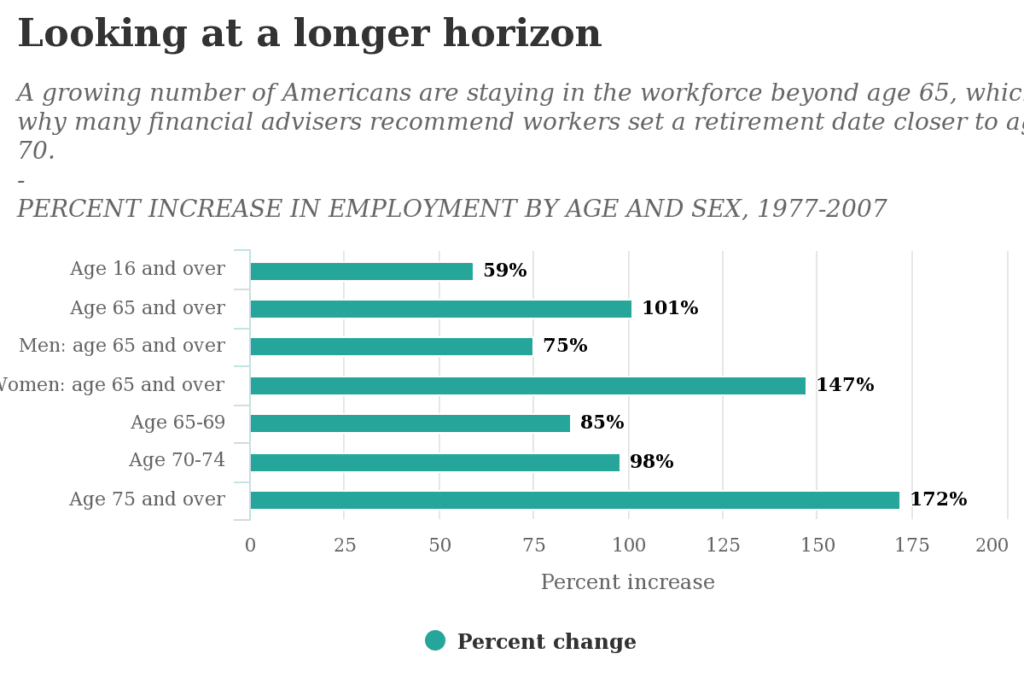
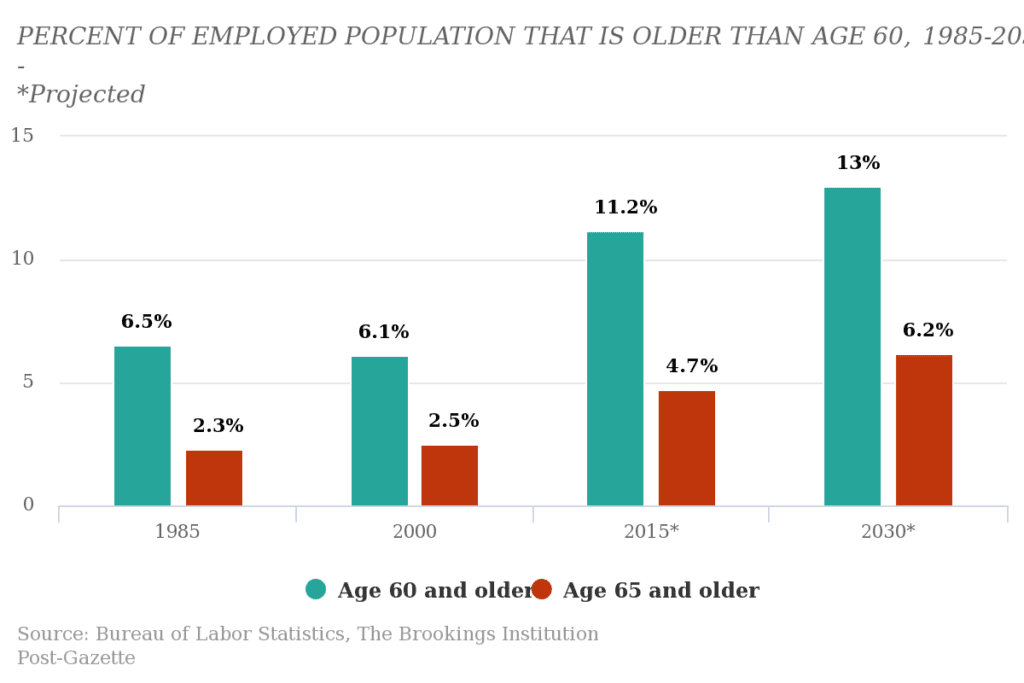
But now, workers often are on the job past the once-common retirement age of 65 — and target date funds haven’t caught up.

When target date funds, also known as life cycle funds, hit the scene in the 1990s, workers who used them were encouraged to choose a target date that corresponded with a planned retirement age of 65. Nearly three decades later, the status quo for most target date funds is still 65, which many financial advisers believe could be too conservative in light of more people working longer and living longer.

target date funds

target date funds

“For most of us, our retirement years will equal that of our working career,” said Jim Meredith, executive vice president of the Hefren-Tillotson wealth management firm, Downtown. “It’s not wise for a 65-year-old person to get overly conservative with their portfolio. A lot of people feel they need to get too conservative as they get older. The question is do they want to earn 2 percent or 10 percent?

“Most target date funds target age 65 for retirement because that’s what the public is asking for,” he said. “The public consciousness is stuck at age 65 retirement, but they would be better off retiring at age 70. Their Social Security benefits would be higher, and they would have five extra years of saving and five extra years of not spending their wealth. The impact over their remaining life would be huge.”

For a typical target date fund set for an age 65 retirement date, the fund would have automatically adjusted to the point where an individual’s portfolio would have an allocation of about 90 percent bonds and 10 percent stocks — at a time when bonds are paying near historic low interest rates.

And the popularity of target date funds in company retirement plans shows no signs of slowing down.

Based on the latest data from U.S. investment companies, more workers are using the “set-it-and-forget-it” approach to retirement investing than ever before.

According to the Washington, D.C.-based Investment Company Institute, 76 percent of 401(k) plans included target date funds in their investment lineup at the end of 2014 compared with 32 percent in 2006.

But critics of this sweet and simple concept wonder how one fund can really suit the needs of everyone who is planning to retire in a given year.

“If I need $40,000 a year from my portfolio in retirement, I can achieve that by taking out 4 percent a year in a $1 million portfolio. But what if I have only a $500,000 portfolio? I need to have an 8 percent return on $500,000 to have the same income as someone with $1 million,” said Paul Brahim, CEO of BPU Investment Management, Downtown.

“The amount of money I have and the amount of money I need are important components of my asset allocation decision,” he said. “If the target date fund predetermines my asset allocation without knowing how much money I have or how much I need, chances are they could be wrong. I could wake up at age 65 and have the wrong asset allocation based on my needs.”

Scott Puritz, Managing Director of Rebalance, a national low-cost wealth management firm based in Palo Alto, Calif., said for many years the standard practice for investing was to access accounts on the day of retirement. For most people, this meant age 59½ or several years later at age 65.

“Now that the general population is living much longer, this model may be too conservative for most investors,” said Mr. Puritz, whose company manages more than $470 million in client assets. “Investors should target later in life and adjust to a growing life expectancy. We advise that investors aim to take out funds at a midpoint, such as mid-70s.

“The purpose of a retirement fund is to cover your whole lifespan, not just the first few years after you retire,” he said. “Now the biggest risk retirement savers face is not that the stock market will drop, but that typical Americans will outlive their retirement savings.” 

Mr. Puritz noted, “It’s important to keep in mind that over any 10-year period from 1928 to 2016, stocks have outperformed bonds on average by over 6 percent per year.”

Wealth managers say more attention needs to be paid to what target date funds do 30 to 40 years after retirement.

“When you retire, you don’t die. You could pick a target retirement age of 65 and then live another 15 to 30 years,” said Ahmie Baum, managing director of the Baum Consulting Group at UBS Financial Services, Downtown. “By picking a target date of age 65, the investor is getting less risky with his investment strategy.”

But Mr. Baum said the trade-off would be that the investor could end up living a few decades beyond retirement with less inflation protection than he would get from owning more stocks due to the heavy weighting of bonds, which pay less yield, in the portfolio.

Target date funds make sense for individuals who want to delegate the risk management and allocation of their retirement account to a professional. But they should keep in mind that their retirement savings need to last a lifetime.

“Each person has a right number for themselves. There is no perfect number for everyone,” said Sean Pearson, a financial adviser at Ameriprise in Conshohocken, Montgomery County. “We don’t advocate targeting age 65 for retirement. For a younger client, it might be a great place to start.

“It gives them the impetus to save a lot for retirement, the opportunity to retire early and the flexibility to make changes if their family situation changes,“ he said. “Setting an earlier retirement date forces clients to save more earlier and that increases the personal savings rate, which is the bigger factor.”


UPDATE: As of Feb 1, 2025, all investments have a minimum of $1 million.

index revolution

What is the best way for investors to achieve above average results, and generate the most return for the least amount of risk? Legendary financial expert Charles Ellis answers that query as he chronicles his personal journey from Wall Street broker to champion of portfolio indexing. In his new book, The Index Revolution, Charley offers a compelling read that highlights all of the important investment lessons that he has learned in his storied 50+ year career within the industry.

Noted Praise:

“Every investor wants to believe they can be above average. Charley Ellis has finally convinced me there is a fool proof strategy to reach that goal.” Consuelo Mack of PBS WEALTHTRACK

“Indexing is the only strategy that effectively guarantees investors will earn their fair share of whatever returns are provided by the stock and bond markets.” – John C. Bogle, Vanguard Founder


401(k) Fees

The typical advice for retirement savers goes something like this: Put money aside religiously, invest in many different things and make sure you’re not paying too much in fees.

But how much is “too much”?

The answer isn’t so easy to come by. More than half of American workers don’t even realize they’re paying fees on their retirement accounts, according to the National Association of Retirement Plan Participants. But this group collectively paid $35 billion in fees in 2014, according to NAARP.

Fees differ by fractions of a percent, so paying slightly more than average might not seem like a big deal. But just as retirement savings compound over time, higher-than-necessary fees can also add up, eating away a big chunk of your savings.

Here’s a simple example. Let’s assume Maya, an office manager, puts $4,000 into a retirement account every year and pays 1 percent to maintain it. Assuming an annual return of 8 percent and ignoring any employer contributions, after 35 years her account will have grown to $584,000. If she paid a fee that’s half a percentage point higher, the account balance would be $522,000.

That increase of a half-percentage point in fees costs Maya $62,000 in money she could have spent on retirement.

Here’s how to find out what you’re paying — and if you could be paying less.

Get your plan documents

401(k) plans have to disclose the fees they charge once a year, thanks to a Department of Labor rule. If your plan has a usable online interface, go into the “documentation” section and look for a document called a “408(b)(2) disclosure” or “summary plan disclosure.” You can also ask your plan administrator for the document.

But once you get it, it’s not always easy to decode, said Scott Puritz, Managing Director at Rebalance.

In the typical 401(k), there are at least seven different levels of fees, of which one or two are transparent to consumers,” he said. “There are the fund-level fees, which are the ones that are disclosed. There is the plan sponsor fee, the record-keeping fee, and the marketing fee. These fees often are labeled differently in different plans.

Puritz recommends going straight to the source, and writing to your plan administrator or human resources director to ask what fees you are paying on your account.

Compare the numbers

Once you get a plan’s documents or a written response, look carefully at all the fees listed, and add up those that apply to you to get a total percentage. Some people enlist a professional for this task.

“When someone comes to me, I start with a cost analysis on a portfolio and show them what they’re paying. For most people, that’s the first time they’ve ever seen that,” Kyle Moore, founder of Quarry Hill Advisors, told CBS MoneyWatch. “I hardly ever see anyone paying less than 1 percent.”

“I use a stoplight analogy with my clients,” said Brian Hanks, a certified financial planner in Salt Lake City. “If their all-in fees, including both the fund and any advisers, is over 2 percent — stop! You’re in the red and need to make changes immediately. Anything between 1 percent and 2 percent is in the yellow and could benefit from some changes. Fees less than 1 percent are green and probably OK.”

Nationally, the average 401(k) charges 0.97 percent to maintain, according to the Investment Company Institute, a trade group representing investment funds. But that’s just for carrying a 401(k) account itself. Within the account, each investment you choose will have its own fee. That’s sometimes called a “fund fee” or “expense ratio,” and it’s usually expressed as a percentage.

How much is too much? When it comes to mutual funds, actively managed funds usually cost more. They also tend to perform worse than passively managed index funds, which are tied to a set basket of investments or a market index, such as the S&P 500.

“Good index-based funds are available within this category with an expense ratio of less than 0.2 percent,” said Derek Tharp, founder of the wealth management firm Conscious Capital.

Shop around

If your 401(k) plan has fees on the high side, you’re more or less stuck as long as you’re with that employer. You can, however, change the funds you’ve invested in to reduce your overall costs somewhat.

But if you have an old 401(k) from a former employer, you’re not obligated to keep it in that employer’s plan. If you find you can get lower fees elsewhere, consider moving your money.

Sometimes, that lower-cost account will be an Individual Retirement Account, or IRA. But that’s not always the case, and some IRAs have even higher fees than 401(k)s. Moreover, since they’re governed by a different set of laws, IRAs have relatively fewer investment protections, according to the Center for Retirement Research at Boston College.

So the key is to compare individual plans carefully with each other. If you need help, enlist a financial adviser who abides by the fiduciary standard.

Consolidating several old retirement accounts into one makes them easier to keep track of — and to notice if your fees change.

“It’s so important for not only financial success, but for a sense of control, if you have your money in one or two spots versus five or six,” said Puritz.

Still not convinced? Consider this. Some years ago, research firm Morningstar compared investment funds using a number of factors, including the funds’ Morningstar star ratings and how expensive they were. While star ratings were good predictors, the firm found, they weren’t the best way to forecast investment return. Cost was.

“In every single time period and data point tested,” Morningstar said, “low-cost funds beat high-cost funds.”

elizabeth kelly

As a White House Special Assistant to President Obama, Elizabeth Kelly played a key role in making the “fiduciary rule” a reality. Currently, Elizabeth is Chief of Staff for United Income, where she utilizes her wealth of knowledge to continue her steadfast dedication to transforming the retirement investment industry.


Transcript:

Scott: First, I’d like to turn the floor over to Elizabeth Kelly. Elizabeth is currently the Chief of Staff for United Income, which is a high powered start up that is part of this wave of innovation that’s trying to finally transform the financial services industry into something that is more pro-consumer, with greater transparency, lower fees, and dramatically better investment products. She came from a stint at the White House where she was a special assistant to POTUS, himself, and with a very broad portfolio that included all of economic security, retirement, and she played a key role in passage of the fiduciary rule. By even the standards of Washington D.C., Elizabeth has amazing academic credentials. She’s a Duke undergraduate and polished off with Yale Law School, and if that wasn’t enough she got a Masters at Oxford. So, with that, let me turn the floor over to Elizabeth.

Elizabeth: Well, thank you, Scott, for the very kind introduction and to you, Julia, and the entire Rebalance and Hera Hub teams. I’m excited to be here. I always enjoy talking about saving for retirement and financial education especially when there’s a movie viewing involved. I confess this is actually my second time seeing those clips. I actually watched it the instant it posted on a Saturday night, which probably gives you a window into my level of nerdiness, but anyway, I encourage your full viewing.”Wizard of Lies,” presents a stark scenario, where an investment manager was blatantly lying and ripping off his clients in violation of many federal laws enough to accrue him 150 year prison sentence, but as Scott said, the sad reality is that many investment advisors are currently ripping off their clients in a way that’s perfectly legal. Charging higher fees than necessary and steering them towards products that may not be in their best interest.

There’s two basic types of financial advisors. There’s broker dealers who are held to a suitability standard and there’s registered investment advisors, or RAAs, who are held to a best interest or fiduciary standard. What’s the difference between those two standards? The way I like to put it is that if I’m held to a suitability standard, I can’t put grandma in tech stocks or something that’s clearly inappropriate given her level of risk tolerance, however, I can put her in a mutual fund that charges her higher fees, no the best available option, but provides me as the advisor higher commission. The best interest standard would require me to put her in the comparable lower fee investment that would be better for her returns.

So, basically, advisors that are not fiduciaries, like broker dealers, may be paid more if they recommend one product over another to their customers; the basic conflict of interest that you’ll hear a lot about tonight. On average, conflict of interest results in annual losses of 1% to affected investors. This doesn’t sound like a lot, but it can add up. So one percentage point lower return could reduce your savings by more than a quarter over 35 years, typical investment horizon. In other words, instead of a ten thousand dollar retirement investment growing to more than 38 thousand over this period, you’d end up with just 27,500. Collectively, this adds up to 17 billion dollars of losses by retirement savers every year Scott said.

The good news is that on Friday, June 9th, the fiduciary or conflict of interest rule requiring advisors to provide advice to their clients in their best interest will go into effect. For the last three years I was fortunate to work closely with Phyllis Borzi, and her terrific team at the Department of Labor, as they worked around the clock to put into effect these protections for retirement savers despite substantial opposition from the financial services industry and many politicians. I’ll let Phyllis do the honors of telling you more about the rule and the process and politics behind it, but before I turn it over to her I want to leave you with a few questions I’d encourage you to ask your financial advisor, even your 401(k) plan administrator.

The first one is, are you a fiduciary? Are you committed to recommending vestments that are in my best interest for both my tax preferred and taxable accounts? Tax preferred ones are things like Roth IRA, IRA, your 401k, whereas your brokerage account would be taxable. The fiduciary rule only applies to those tax deferred retirement savings accounts, so you’re going to want to make sure even after Friday that you’re getting best interest advice on both.

The second is, what are the total fees I’m paying? First off, what fees am I paying on my underlying investments? What’s the expense ratio on the fund? The average is about .64%, but Vanguard, BlackRock, others have offerings that can be as low as five basis points or eight basis points. That’s .05 to .08%. The thrift savings plan that many of you may be in if you’re federal government employees or have been at some point in time, most of their offerings are from .02% to .04% is their highest offering.

There’s no reason to be paying .64% and definitely no reason to be paying upwards of 1% fee that many actively managed funds charge. And then I’d encourage you not to look just at expense ratio, but also at the other fees you might be charged. Things like 12b-1 fees that are charged by the fund to cover marketing or distribution costs. Load fees that you may incur if you’re selling funds. Redemption fees if you sell the fund too soon. Just make sure you’re digging into all of this and that your financial advisor is giving you a full picture. You may also be paying management fees, advisory fees, even a registered investment advisor may charge one to one and a half percent a year, which starts to add up very quickly, so I encourage you to dig into that.

The last question that I’d encourage you to ask is, what changes you should expect to see in light of Friday’s rule and it going into effect. A number of large corporations have announced substantial changes to their practices. The majority of which we think are for the good, but you’re going to want to understand what that is. I know this can be a tough conversation. Often times financial advisors are people who you’ve had relationships with for many years, one of my favorite stories is there was an academic who did a lot of work on the fiduciary ruling and encouraged his mother to switch financial advisors because he discovered that she was in completely inappropriate funds. She was paying too much, and he goes to his mother and tells her such and she says, “I can’t switch financial advisors, I’d have to switch temples.”

All that to say, I understand it’s a tough conversation, but it’s obviously very important for your financial future, so I encourage you all to take on that responsibility. And with that, I’ll turn it over to Phyllis.

jamie raskin

U.S. Congressman Jamie Raskin long has been a proponent on increased consumer protections. As a member of the House of Representatives, Raskin voted to defend retirement benefits packages for federal workers, and remains a staunch supporter of the U.S. Department of Labor’s “fiduciary rule,” a catalyst for safer retirement investing. In Rebalance’s retirement protections Q&A, Congressman Raskin talks about why stronger Wall Street regulations are needed, and how the fiduciary rule will help curb dishonest brokers.


Transcript:

Scott: Our next speaker is Congressman Jamie Raskin. Thank you so much for being with us. Those of us who live in Montgomery County, he’s our Congressman, new to the job. Congressman Raskin had a bruising primary battle, was the underdog, and won an incredible primary election. He’s also quite a fighter. Congressman Raskin has a unique combination of boyish charm, and intellect and is very media savvy. Progressive politics, makes him a rising star in the democratic party; he’s one of the people of the moment.

Prior to being a U.S. Congressman he was a very successful Maryland State Senator with a litany of accomplishments, and also for the past 25 years he’s been a professor at American University Law School in constitutional law.

Congressman Raskin: Scott, thank you very much. Thank you for organizing this and inviting me, and allowing me to participate in the conversation. I thought, originally, when you invited me you were looking for my wife because she was the Deputy Secretary of the Treasury Department and she knows all about this, and knows Elizabeth and Phyllis.

Congressman Raskin: And was involved with these guys and it’s great to hear both Elizabeth and Phyllis describe their work. Phyllis said she was on the Hill for 16 years, and I’ve been on the Hill, I think, for 16 weeks, but it feels like 16 years. And, but look, the work that everybody up here has done has been essential to making sure that the marketplace is not [00:39:00] an arena of scams and ripoffs and predatory action against consumers and investors. That’s what it’s all about.

I think most of us as Americans believe in a market economy. Not necessarily a market society, not everything should be governed by market principles, but that is how the stock investment business it works, but it has to be regulated because if it is not,  you get what happened in the 1920s and 30s, and you get what happened in 2008. And we’ve seen every time what happens with the deregulation and then the bubbles blowing up, and the scam artists, and the predatory activity, and then the whole thing explodes, and middle class people across the country are left holding the bag.

The 2008 crisis cost 10 million people their jobs, and threw 13 million people out of their homes, and it cost the people of the country trillions of dollars in their retirement savings, in their pensions, in their home equity values. And so, joblessness, homelessness, profound economic dislocation and uncertainty that a lot of people still haven’t recovered from. It’s serious business and I did watch the Madoff movie last night in advance to see the whole thing, and I mean, it’s just a terribly sad thing that one vindictive, narcissist, sociopath could cost so many people their life savings and their fortunes.

And by the way, one thing that I’ve noticed by being involved in the government, is that people often trust those in their community (ethnic or religious); for instance, people will organize in their church or their synagogue and so they trust those within that space. They don’t ask the hard questions and then thousands of people, like in the Madoff case, just end up bankrupted or busted because of somebody who everyone said, “Oh, yeah. That’s a good guy. He does so and so’s business, he …”

So, the fiduciary rule is a very big deal and a great accomplishment. I’d noticed that the new Secretary of Labor, Mr. Acosta, is already attacking it before it’s even come into existence, which is extraordinary, and seems to want to be reviving the APA process to issue a rule revoking it. I would not be surprised if they attempt to legislatively destroy the rule because that’s basically the kinds of legislation we’ve been voting on ever since we took office in January. Although, I would recommend to my friends across the aisle that they not get involved with this one because you know, when the public wakes up to what this means.

And you guys have done a great job of explaining to this group, but when the public wakes up to the fact that well now, their investment advisors have to have a fiduciary duty to them, which means that’s legally enforceable. It’s binding. Previously, they could say, “Oh, well I didn’t have a fiduciary duty to you, so I didn’t give you the best or second best or third best, but I gave you the fourth best advice and it didn’t work out, but it was reasonable.”

Scott: Suitable.

Congressman Raskin:“It was suitable.” Then suddenly they had a legal escape hatch, but not now under the fiduciary rule. If we go to the American people  and we say,”Well, do you want your investment advisors to have a fiduciary obligation to you or fiduciary obligation to their own business or to some other businesses?” I think that 99% of the people are going to say, “We want the fiduciary duty to run to us.” And so, but it could very well happen because, and the reason I know that is because we’re voting on what’s arguably even a more evil and sweeping piece of legislation this week, which is the so-called Choice Act, which would basically overturn the Dodd-Frank Act, which was the most important piece of consumer protective financial legislation enacted in the United States of America in 75 years.

It created the Consumer Financial Protection Bureau. It instituted a whole host of protections for people’s investments across the board, and Wall Street has been agitating for its destruction and it got out of the Financial Services Committee on a party line vote and it is coming; the first vote we did today (a procedural vote) but they want to vote on it this week to overturn Dodd-Frank. So, let me just tell you quickly what’s in this legislation.

It does wipe out the Consumer Financial Protection Bureau, which was actually consolidation. It used to be really fragmented and all over the place. It was at the Fed, it was the Comptroller of the Currency, here and then they said, let’s create one bureau that would be a watchdog for consumers against financial scams and ripoffs and hidden fees and so on. And it has already saved 36 billion dollars for 12 million people. 12 million people have saved 36 billion dollars in scams and ripoffs.

And that’s pretty extraordinary that it’s benefitting millions of Americans already. And why would we want to get rid of it? It doesn’t make any sense. It would also get rid of the Financial Stability Oversight Council, the FSOC, which is a forum for regulators to exchange information about risks in the financial system. It would do away with the so-called Orderly Liquidation Authority. You remember what happened with the financial meltdown, the subprime mortgage crisis was that the choice was either they would let a bank just completely go bust or they would bail it out, right?

That was a terrible choice and so, the Orderly Liquidation Authority creates another possibility, which is not an overnight debacle, but a staged liquidation authority. Dodd-Frank also instituted a series of protective measures to make sure banks don’t get to that situation by increasing the capitalization requirement, so that they’ve got to have more money within them and guaranteeing that the banks themselves are engaged in safe practices.

There’s the FOCA rule, which basically said that commercial banks could not engage in speculative bets, but had to be engaged in the traditional business of banking. All of this, including stress tests by the way, on the banks to make sure that they’re financially solid. All of this now is up for grabs with this so-called Choice Act. Essentially it’s legislation to turn the clock back on the law to what existed before the 2008 mortgage meltdown crisis and so far it is passing with flying colors on a total party line vote. As we try to defend the gains that were made for consumers and investors and retirees, and pension holders during the Obama Administration.

So, look, we need a massive campaign for financial literacy in America and we need it for two reasons. One, is so people can protect their own investments and understand what it is that they’re getting their money into and they can make shrewd and prudent, and strategic choices consistent with what their financial goals and agenda are. But two, we need massive financial literacy so people as citizens and as policy makers can make the right decisions about legislation and about regulation. And so, I’m glad that you’re conducting this and I do seize upon every opportunity I can to tell people that the Consumer Financial Protection Bureau has saved tens of millions of people money and it has saved billions of dollars from scams and ripoffs and unfair charges that are out there.

And so, we need to stop this Choice Act. We’ve got to get the word out there about that and you know, the great irony of course, is that the president campaigned against Wall Street, campaigned against Goldman-Sachs and of course, Goldman-Sachs and Wall Street are exceedingly well-represented in his administration and we have a political program, which is really at odds with the interest of the vast majority of the American people who are either retirees or planning for their retirement or beneficiaries of retirement plans or trying to figure out what to do with their own investments. So, thank you for having me and thank you for the great work that all of you guys have done.

Phyllis Borzi

Phyllis Borzi has long been a fervent advocate for retirement investor rights. From her career as an employee benefits attorney, to her senior position in the Obama administration as Assistant Secretary at the U.S. Department of Labor, Borzi has garnered well-earned praise for her continued efforts to make retirement investing safer for all Americans. In this panel discussion, Phyllis leverages her decades of knowledge and experience to provide invaluable advice to the audience of retirement savers.