
As companies look to cut costs amid the coronavirus pandemic, many of them have or will soon stop matching their employees’ 401(k) contributions.

That can make it harder for you to stay on track with your savings.

During the financial crisis of 2008-09, nearly 1 in 5 employers that offered a 401(k) plan match pulled back their contributions. Some experts expect the current recession to be even more brutal, and many companies have already turned off the spigot into their workers’ nest eggs.

Someone in your human resources department may be able to discuss if your company match is on the chopping block. There might be other ways to find out, as well.

“This is the kind of information that would be released in an earnings conference call to analysts if your employer is publicly traded,” said Scott Puritz, co-founder and managing director of Rebalance, which helps clients with 401(k) rollovers.

Sometimes smoke doesn’t lead to fire. “Many companies during the 2008 crisis warned that they would suspend or end matching and then did not do so,” Puritz said. 

“Nevertheless, what’s coming next in terms of the pandemic’s ultimate economic impact is impossible to predict.”

Here are two steps that can help you prepare.

Save more now

If you’re not currently saving enough to get the entire company match, you may want to start doing so, said Arielle O’Shea, investing and retirement specialist at NerdWallet.

“Take advantage of that match while you have it,” O’Shea said.

If you’re already meeting the match, there’s not much you can do because most employers distribute their matches by pay period, said Jean Young, senior research analyst at Vanguard Investment Strategy Group. In other words, you can only get, say, 6% of one paycheck matched at a time.

Yet some employers conduct annual matches, meaning that upping your contributions might generate you a higher company contribution in the end. You’ll want to learn the rules first.

“Talk to your human resources department before you front-load your 401(k),” Puritz said.

Either way, you should consider upping your own contributions if you can while we’re in a downturn. That way, Young said, “You’re able to ‘buy on sale,’ and take advantage of a market recovery.”

Review your plan

If your employer stops contributing to your 401(k) plan, you might want to start saving in an individual retirement account instead, experts say.

“One factor is the quality of the plan,” said Barbara Roper, the director of investor protection at the Consumer Federation of America.

For example, many smaller 401(k) plans are “loaded up with inferior, high-cost options,” Roper said. What you want: a retirement account with low fees.

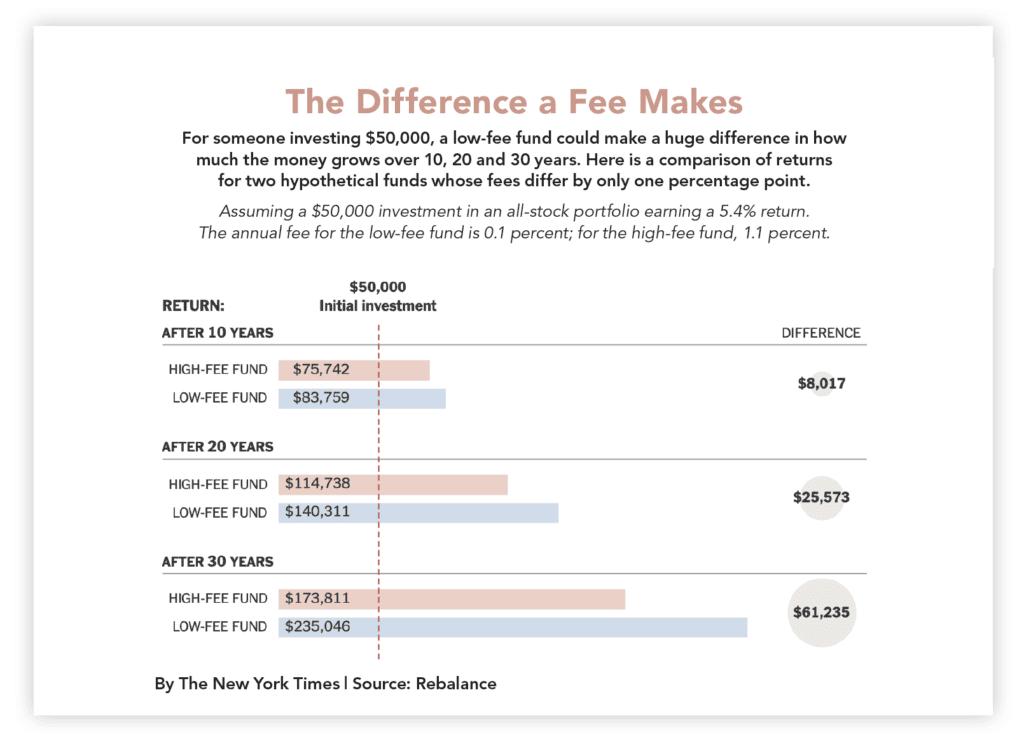
Wondering what counts as a low fee? Plans typically charge anywhere between 0.1% to 3% of your assets each year. Ideally, you want to be paying somewhere closer to 0.1%.

If not, Roper said, “You may be better off saving for retirement in an individual retirement account.”

Still, the government caps how much you can save in an IRA, and so if you can afford to put away more money, “you’ll want to do that in a 401(k) because the tax advantages are still powerful and the contribution limit is higher,” O’Shea said.

Bethesda, MD – May 13, 2020 – Rebalance, a mission-driven investment firm committed to making premium financial management services affordable and accessible to everyday investors, has launched the COVID-19 & Investing Resource Center. 

The COVID-19 & Investing Resource Center was designed to provide information and guidance for consumers who are concerned about their retirement and investment portfolios in light of the COVID-19 crisis and accompanying market volatility and insecurity. 

Resources available to consumers via the COVID-19 & Investing Resource Center include: 

A historical overview of what past financial crisis have meant for market performance and how this translates to investing and retirement planning in today’s difficult times. 

A simplified breakdown of what the CARES and SECURE Acts mean for personal investors when it comes to taxes, IRA contributions, required minimum distributions from retirement accounts and loans from or withdrawls against retirement accounts. 

Easy-to-implement advice allowing investors to take control of their financial futures amidst market volatility and financial fears. 

“For the past two months, we have been in constant communication with our clients in regards to the COVID-19 crisis and how it is effecting their retirement and investment accounts,” said Rebalance Managing Director Scott Puritz. “The COVID-19 & Investing Resource Center is a compilation of all of the information we have provided our clients, which we are now making available to all investors. This will provide them with the resources required to manage their investment and retirement portfolios in the face of market volatility and insecurity.” 

The COVID-19 & Investing Resource Center can be accessed online at https://covid.rebalance360.com/ 

About Rebalance 

Rebalance is a mission-driven, award-winning investment firm committed to offering premium, fiduciary wealth management services to everyday investors. The firm is at the forefront of providing consumers with a fundamentally different and better set of investment options: lower costs, endowment-quality globally diversified investment portfolios, and systematic rebalancing. 

The Rebalance Investment Committee is anchored by three of the most respected experts in the finance world: Burt Malkiel, the world-renowned Senior Economist at Princeton University and author of, “A Random Walk Down Wall Street”; Dr. Charley Ellis, the former longtime chairman of the Yale University Endowment; and Jay Vivian, the former Managing Director of IBM’s $100+ billion in retirement investment funds for more than 300,000 employees worldwide. 

Rebalance is headquartered in Palo Alto, CA and Bethesda, MD, and currently manages more than 600 clients with more than $750 million in financial assets. In 2018, Rebalance was honored by Schwab’s 2018 Pacesetter IMPACT Award™ for Innovation and Growth. 

Contact: 

Linda Sperling
Dir. Of Strategic Communications
lsperling@rebalance360.com
703-606-2518

Tens of millions of Americans have lost their jobs as the coronavirus ravages the economy, bringing the unemployment rate to a Great Depression-level 14.7 percent — and many are looking for emergency lifelines to meet living expenses.

Retirement accounts will be a tempting option. Last year, about 63 million households had defined contribution plan accounts, and 46.4 million households owned I.R.A.s, according to the Investment Company Institute.

The CARES Act signed into law in March provides flexible hardship withdrawal options for 401(k) and individual retirement accounts. But people who have lost their jobs and don’t need to tap their retirement account early still have a decision to make: Leave the savings in the former employer’s plan, or roll them over to an I.R.A. In the event that a former employer goes out of business and terminates the plan, your choice is a rollover or taking a direct distribution. The best choice will depend on a number of factors.

If you lost a job because of the coronavirus crisis, the CARES Act offers special exemptions from the usual withdrawal rules for 401(k) or I.R.A. accounts. Adoption of the exemptions is voluntary for employers, but most seem to be offering them; Fidelity reports that 96 percent of the plan sponsors that it works with have added these features, for example.

Normally, income taxes are due on withdrawals from these accounts in the year you take the distribution. And if you are younger than 59½, a 10 percent penalty is levied. Under the CARES Act, you can withdraw 100 percent of your account, up to $100,000, without the usual 10 percent penalty. The income taxes are still due, but you can spread out payments over three years or redeposit the withdrawn sums anytime during that period. (The CARES Act also relaxes the rules on loans from 401(k) plans, but most employers won’t permit loans if you no longer work for them.)

“This is probably the most flexible distribution and taxation arrangement that I’ve ever seen for retirement plan benefits,” says Fred Reish, a lawyer who specializes in employee benefits. “It’s really quite extraordinary.”

The prospect of cracking open retirement piggy banks to meet emergency needs doesn’t bode well for the nation’s retirement savings, which reflected economic inequalities before the crisis that are likely to worsen now. Widespread drawdowns under the emergency law may underscore a post-crisis need to develop more robust emergency saving options.

The NCAA college basketball tournament was canceled, but for those following the financial markets and the real economy, there was more than enough March madness to satisfy the most rabid thrill-seeker. We have witnessed unprecedented volatility, a sudden bear market in stocks, and a collapse in the labor market unrivaled in its speed and intensity. These are the times that can produce life-changing investment blunders as well as unique opportunities.

No one knows how many people the global Covid-19 pandemic will kill or how long it will last. Nor does anyone know the extent of the global downturn and how much further stock prices will fall. But there is one thing that everyone knows: Equity valuations are far more attractive today than they were at the start of 2020.

The so-called CAPE ratio—the price-earnings multiple for the market based on cyclically adjusted earnings averaged over the past 10 years—is the most effective tool for predicting the likely long-run payoff from holding a diversified portfolio of common stocks. Initial CAPE ratios predict about 40% of the variation in next-decade stock returns. When CAPEs were very high (as they were in early 2000), stock returns were extremely low for the next decade. The best decades for stock returns occurred when initial CAPEs were low.

At the market peak in February, CAPE ratios were at elevated levels—not as high as at the peak of the dot-com bubble, but among the highest in history, suggesting very low future returns. Today they have fallen more than 20%, suggesting that equity purchases at today’s levels should earn decent future returns.

A second reason investors may want to begin taking a more constructive view of the stock market is that alternative investments aren’t offering attractive returns at the moment. Yield on the safest bonds in the U.S. are near zero and are actually negative in Europe and Japan. Thus, the gap between probable equity returns and bond yields has risen significantly.

Finally, common stocks—representing ownership of real assets (factories, commodities, real estate, etc.)—have been a reliable long-run inflation hedge. It is true that in recent years inflation has been tame, and many analysts believe that it will remain inconsequential for a while. But central banks across the globe have been pouring unprecedented amounts of money into their economies. The Federal Reserve has signaled an almost unlimited willingness to buy financial instruments and expand the money supply. The recent $2 trillion fiscal stimulus package may be only the beginning, and a similar-sized infrastructure package may follow. When the pandemic has passed, there is certainly a possibility that our recent experience of stable prices won’t be permanent.

Rebalancing is an investment technique that has proved effective when relative valuations of different asset classes are in flux. All investment portfolios need to be diversified, with the exact mix of holdings reflecting the investor’s capacity and tolerance for risk. Rebalancing simply involves a periodic review to ensure that the combination of investments in a portfolio comports with the investor’s attitude toward risk.

In December, Atanu Saha and I pointed out on these pages that stock prices had soared over the past year and that investors should consider whether their overall portfolios were riskier than their target allocations. If so, rebalancing the portfolio by selling some stocks and investing the proceeds in safer assets would be warranted. Rebalancing always tends to bring portfolio allocations back to target ranges to constrain risk. In very volatile markets, it can also enhance returns.

Today I recommend that investors consider moving in the opposite direction and begin a program of liquidating a portion of their bond and short-term securities funds and buying equities instead. There is no need to complete any reallocation all at once. By moving money into equities slowly over time, you will “dollar-cost average” your reallocations and avoid the feeling of regret you could experience by reallocating equities at prices that could be well above the ultimate market bottom.

Whenever you do rebalance, be aware of the tax implications. By selling an asset class that has risen in value, you may have realized a capital gain. If so, try to sell a security or fund carried at a loss, and replace it with an equivalent but not identical investment. And favor low-cost index funds and exchange-traded funds, as well as discount brokers. The one thing you can control is the investment expenses you incur.

One final piece of advice. The unprecedented disruptions caused by the coronavirus underscore the absolute necessity of having a precautionary cash reserve of at least three months’ living expenses to help pay for unexpected medical bills and provide a cushion during a period of unemployment. If you are not adequately covered by medical or disability insurance, or if you work in the gig economy where employment opportunities can disappear overnight, the reserve needs to be larger. A “cash reserve” invested in short-term securities is over and above any reserves you may carry in your investment portfolio. Replenishing (or funding) a precautionary cash reserve fund should come before any decisions on your investment portfolio. And any known large expenditures (such as a college tuition payment) need to be funded with safe short-term investments (such as bank certificates of deposit) whose maturity matches the date at which the funds will be needed.

This article was originally published in the Wall Street Journal on April 7, 2020. Professor Malkiel is the author of “A Random Walk on Wall Street” and a member of Rebalance’s Investment Committee.

The nosebleed heights of today’s stock prices have me, like many other investors, a bit on edge.

Have equities become too risky? How much longer will the decade-long bull market last? Is a stock crash or a recession coming? Should I sell?

I called Burton Malkiel at his home in Florida recently to talk about the state of the stock market and what it means for average investors, people, like me, who have been stashing money in 401(k) accounts or who might own stocks in taxable accounts.

Malkiel, 87, wrote “A Random Walk Down Wall Street,” the investment classic first published in 1973. He has served as dean of the Yale School of Management, as a director of the Vanguard Group and as a member of the president’s Council of Economic Advisers. He is currently a professor emeritus of economics at Princeton University.

Malkiel is part of an influential cohort — along with the late John C. “Jack” Bogle and legendary stock picker Warren Buffett — that has warned most of us against trying to divine which stocks will beat the overall market. Most people, this persuasive line of reasoning goes, are better off investing in index funds or a diversified portfolio with low fees.

But with the Dow Jones industrial average approaching 30,000, another, broader issue arises: Have stocks, in general, become too expensive?

“What we can say is that relative to historical valuations, the stock market is quite richly valued,”Malkiel said.

Malkiel stated the obvious: Stocks have had a tremendous run in the past 10 years, but no bull market runs forever. History tells us, he said, that the next 10 years aren’t going to be quite so merry.

“We are in an era when, I think, we are going to clearly have very low returns and much lower than average stock returns,” Malkiel said. “If you look at the empirical work, you would suggest the stock market over the next 10 years is likely to give you mid-single-digit returns.”

Over the next decade, he said, we would be “very fortunate” to see 5 percent a year.

That’s a heartburn number for pension fund managers counting on 8, 9 and even 10 percent annual returns. So what’s an investor to do?

Start with rebalancing, Malkiel said. “If the big rise in the stock market has put your stock holdings much higher than normal levels for you, then I would say take some out and put it in other categories.”

Malkiel sits on the investment committee of Rebalance, a financial advisory firm based in Bethesda, Md., and Palo Alto, Calif., that puts clients’ money in long-term, low-cost index funds, mostly Vanguard Group’s exchange-traded funds.

I wrote about Rebalance, then known as Rebalance, a couple of years ago. Rebalancing, in its simplest form, means buying and selling stocks and bonds annually to keep your holdings in line with your ability to tolerate risk.

“Given that asset prices shift, sometimes significantly, it’s normal for investors to look at their portfolio allocations periodically and rebalance, in order to avoid over- or under-weighting exposures to certain asset classes,” said Shelly Antoniewicz, senior director of industry and financial analysis at the Investment Company Institute, which represents the mutual fund industry.

Take last year’s U.S. stock boom, which returned 31 percent, compared with a 9 percent return in bonds.

“If you did nothing, your asset allocations will have moved to include more equity than you intended,” Antoniewicz said. “If you aim for a 60-40 allocation between equity and bond fund holdings and have not yet rebalanced, your current equity allocation would be 64 percent, not 60 percent, and your current bond allocation would be 36 percent, not 40 percent. So, investors who want to rebalance back to a 60-40 split will sell stock funds and buy bond funds.”

Malkiel said rebalancing a portfolio cures many ills for investors who are not — and I emphasize NOT — professional stock pickers.

“Nobody, and I mean nobody, can consistently predict the short-term moves in the stock markets,’ Malkiel said.

“There’s a lot of people who get it right sometimes. But nobody gets it right consistently. Don’t try to time the market,” Malkiel said. “You will get it wrong. Ride things out. Be well diversified.”

Diversified means buying a variety of stocks across multiple industries or, better yet, holding a healthy mix of mutual funds that include large and small companies, U.S. and international stocks, and even some bonds.

I asked Malkiel whether he follows his own advice.

“Am I still holding equities? Yes,” the professor said, speaking by telephone from Florida. “But I hold other things as well. I am broadly diversified. I hold fixed-income investments. And I hold real estate.”

When asked about the likelihood of a recession or other economic pullback in 2020, Malkiel said he avoids making predictions on short-term market behavior because, well, it is just too difficult.

“The biggest threat is something that will come out of nowhere,” Malkiel said. “Just think of the last few days. We have this new virus coming out of China. Is it going to be contained? Is it something that affects the whole world? In [former defense secretary] Donald Rumsfeld’s parlance, it’s not what we know now. It’s what we don’t know.”

I can’t do anything about that. But I can rebalance to make sure that I am takinga market risk that I have decided is tolerable for me.

Year-end is the traditional time to forecast the economy and ensure that your investment portfolio can handle future shocks. Habitual worrywarts—including some practitioners of the dismal science—see ominous signs that America’s record-breaking expansion will soon end. Meanwhile, most stock-market pundits see recent strong consumer spending as a good omen, signifying that stocks and the economy will continue to rise. Let’s review the best indicators to make sense of the picture.

The Conference Board, a nonprofit for economic research, tracks 11 predictive measures of future economic activity in its Index of Leading Economic Indicators. The LEI purports to forecast the economy over the coming three to six months. The individual components include data on unemployment, the direction of the stock market, consumer and business sentiment, and manufacturing activity. Unfortunately, the LEI is somewhat unreliable as a forecaster and often misleading.

We examined the record of the LEI (and its components) over the eight recessions and nine sudden market declines of 15% or more since 1960. The good news is that the LEI and many of its components have had a near-perfect record in anticipating recessions. The most reliable indicators have been the shape of the yield curve, business and consumer confidence, durable-good purchases and housing starts, and the health of the labor market. These measures have also correctly signaled stock-market downturns. (The biggest exception is consumer spending, which has risen before nearly every past recessions, falling only after the recession starts.)

Yet despite the LEI’s fair record, there are good reasons to doubt that any economic statistic can reliably predict when a downturn will occur. Since 1958, even when the indicator was correct, the lead time between its turning negative and an economic slide has been as long as 18 months. Worse, there have been many false positives. Leading indicators have incorrectly forecast a downturn many more times than they correctly predicted recession or stock-market decline. In fact, the most accurate indicators have the highest incidence of false positive signals. A signal that often predicts recessions that don’t happen is more misleading than helpful. As the economist Paul Samuelson once quipped, “The stock market has predicted nine of the last five recessions.”

Today, the auguries are generally favorable. Stocks and the labor market have performed well, and the yield curve is sloping upward again. But business confidence has declined over the past three months through November, based on uncertainty about trade and global politics.

Our view is that the best course of action is to be agnostic about future economic activity and the direction of the stock market. We subscribe to the wisdom of John Kenneth Galbraith, who once said, “There are two kinds of forecasters: those who don’t know, and those who don’t know they don’t know.”

If accurate forecasts of the economy and the stock market are impossible, how should investors assess their portfolios at year-end? There are three steps every investor should take, none of which require futile attempts to forecast the future.

First, ensure that their asset holdings are broadly diversified. Hold internationally diversified equities and real assets such as real estate that will benefit if growth continues or inflation accelerates. Also hold safe assets, such as fixed-income securities, that would balance the losses in a recession.

Second, maintain the balance of their portfolios to suit their retirement timeline and risk tolerance. If equity holdings increase so that the risk level of the portfolio is too high for comfort, for instance, it may make sense to sell off equities and reinvest in safer asset classes. Rebalancing always reduces risk and in volatile markets can increase returns.

Third, be sure to harvest tax losses and keep costs minimal. Losses should be realized on assets that have declined in price. It’s possible to deduct the loss on any asset sold even if one is reinvesting the proceeds in a different asset class for balance. Net losses, up to a certain amount, can be deducted from income taxes. Low- or zero-cost index funds should be your favorite investment vehicles, and portfolio management costs should be minimized. The greater the costs and fees you pay, the lower your returns. As John Bogle used to say, “You get what you don’t pay for.”

This op-ed originally appeared in the Wall Street Journal on December 30, 2019


FOR IMMEDIATE RELEASE
NOVEMBER 13, 2019

Drew Pratt Joins Rebalance As Vice President of Investment Advice


Everyday investors, including high-net-worth clients, increasingly seek premium, fiduciary wealth management services at lower-costs and higher-value.

Rebalance, a mission-driven investment firm committed to making premium wealth management services affordable and accessible to everyday investors, has announced the addition of Drew Pratt to the position of Vice President, Investment Advice.

Pratt will help contribute to the firm’s wealth management practice while also advancing Rebalance’s 360 Product Suite, a full-service wealth management offering. Pratt brings more than 35 years of wealth and portfolio management, asset allocation strategy, trust and estate and financial planning experience to Rebalance.

“Drew is enormously respected in the industry and wields expertise in wealth management for both individuals and institutional clients. He also brings deep knowledge in investment and portfolio management.  After decades of experience in active management, Drew has become a true advocate for low-cost portfolio indexing,” said Rebalance Managing Director Mitch Tuchman. “Drew embodies our culture of high integrity and the core belief that our client’s financial well-being is paramount.” 

Prior to joining Rebalance, Pratt spent over a decade at Wetherby Asset Management in San Francisco, California, a prestigious independent advisory firm that serves ultra-high-net-worth clientele and has over $5 billion in assets under management. 

While there, Pratt served as a Wealth Manager and Director of Research. During his tenure, the firm’s assets under management grew from approximately $1.8 billion to $5 billion. Pratt’s typical client portfolio averaged around $15 million in total assets.

“What attracted me to Rebalance was its innovative platform, committed team and sensible approach to wealth management,” said Pratt. “The investment platform provides a great value proposition to our clients by featuring global diversification, low cost and low turnover, all while striving to provide exceptional client service. I’m thrilled to live my passion for providing solid advice to clients in their financial and life decisions.”

Pratt’s passion for financial empowerment extends beyond the workplace into the community. As a native of Mill Valley, California, Pratt dedicated 13 years to the investment committee for the Kiddo! Endowment, a Mill Valley Schools Community Foundation that helped raise millions in funding for programs like art, music, drama, poetry, dance, P.E., technology support, teacher grants and classroom and library aides. Pratt also Chaired the Tamalpais High School Foundation Investment Committee that has raised over $5 million to provide grants for innovative programs, state-of-the-art tools and equitable educational opportunities for students.

Drew received an M.S. in Finance from Boston College and a B.B.A. from the University of Wisconsin, Madison. He is a CFA® charterholder and a member of the Chartered Financial Analyst Society of San Francisco.

About Rebalance 

Rebalance is a mission-driven, award-winning investment firm committed to offering premium, fiduciary wealth management services to ordinary investors. The firm is at the forefront of providing consumers with a fundamentally different and better set of investment options: lower costs, “endowment-quality” globally-diversified investment portfolios, and systematic rebalancing. Rebalance’s Investment Committee is anchored by three of the most respected experts in the finance world: Burt Malkiel, the world-renowned Senior Economist at Princeton University and author of, “A Random Walk Down Wall Street”; Dr. Charley Ellis, the former longtime chairman of the Yale University Endowment; and Jay Vivian, the former Managing Director of IBM’s $100+ billion in retirement investment funds for more than 300,000 employees worldwide.

Rebalance is headquartered in Palo Alto, CA and Bethesda, MD, and currently manages over 600 clients with more than $750 million in financial assets. In 2018, Rebalance was honored by Schwab’s 2018 Pacesetter IMPACT Award™ for Innovation and Growth.

Save

It’s summer vacation and time to catch up on that…investment reading?

Well, for some people, that’s the perfect way to spend a day at the beach. So we asked fund experts for their tips, and received a mix of recommendations, including books on investing, Wall Street history and bitcoin.

Here are edited comments from the pros on their top picks.

SEAN GAVIN, portfolio manager, Fidelity Investments

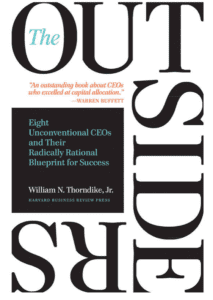
“The Outsiders: Eight Unconventional CEOs and Their Radically Rational Blueprint for Success,” by William N. Thorndike (Harvard Business Review Press, 2012)

the outsiders investment book“A thoughtful look at the strategies of eight CEOs who created significant shareholder value. Thorndike distills the characteristics of these CEOs into the ‘outsider’s checklist,’ which can help businesses and investors adopt the right approach to take their game to the next level.”
“The Little Book of Behavioral Investing: How Not to Be Your Own Worst Enemy,” by James Montier (John Wiley & Sons, 2010)

“This is a wonderfully distilled book on many of the common behavioral pitfalls of investing, such as overconfidence and information overload. I point all new investors toward this book when they first experience the market’s ups and downs.”


GEMMA WRIGHT-CASPARIUS, senior portfolio manager, Vanguard’s fixed-income group

“Us vs. Them: The Failure of Globalism,” by Ian Bremmer (Portfolio, 2018)

“This offers a fascinating analysis of globalization’s shortcomings and unfulfilled promises, while highlighting the potential impacts that an unraveling of globalization could have on the economy and markets.”


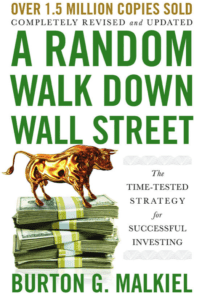
“A Random Walk Down Wall Street,” by Burton G. Malkiel (W.W. Norton & Co., 1973)

random walk

“Malkiel’s book considers how investors can develop and refine their risk profile to allocate their investments accordingly, while managing their portfolio to meet their personal objectives. It also provides a helpful reminder on how to think about risk versus reward, and the importance of diversifying portfolios over the long term.”


MICHAEL ARONE, chief investment strategist for the SPDR Americas business at State Street Global Advisors

“Predictably Irrational: The Hidden Forces That Shape Our Decisions,” by Dan Ariely (HarperCollins, 2008)

“A great exploration of how people actually behave versus how economic models tell us they should behave. If you are seeking a better understanding of why we do the silly things we do, read this book.”

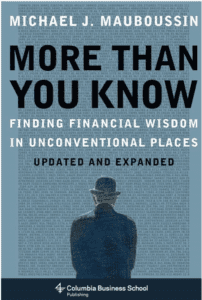
“More Than You Know: Finding Financial Wisdom in Unconventional Places,” by Michael Mauboussin (Columbia University Press, 2006)

more than you know“Today’s markets are dominated by a handful of widely held narratives, not underlying fundamentals, with extraordinary monetary policies and curiously timed fiscal stimulus, making it difficult for investors to determine where we are in the long-running economic expansion. This book stresses the importance of using a multidisciplinary framework to solve today’s investment challenges, combining elements of investment philosophy, human decision-making and science (such as physics), along with psychology and complexity theory.”

DAN DRAPER, managing director and global head of Invesco ETFs and unit investment trusts

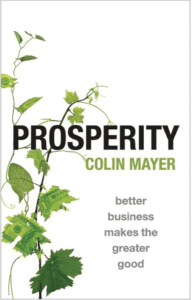
“Prosperity: Better Business Makes the Greater Good,” by Colin Mayer (Oxford University Press, 2018)

Prosperity“This begins with the history of the corporation and brings in business, law, economics, science, philosophy and history to suggest how the modern corporation can realize its full potential to help wider society, as well as shareholders.”

“The Bitcoin Standard: The Decentralized Alternative to Central Banking,” by Saifedean Ammous (John Wiley & Sons, 2018)

“With a strong libertarian voice, this provides a good overview of cryptocurrencies and their potential to change our global economy and our lives in the future.”


FORD O’NEIL, portfolio manager, Fidelity Investments

“The Boys in the Boat: Nine Americans and Their Epic Quest for Gold at the 1936 Berlin Olympics,” by Daniel James Brown (Viking, 2013)

“This tale of the U.S. medal-winning rowing crew showcases the benefits of assembling a team from disparate backgrounds. Diverse experiences combine with discipline and collaboration to show that the whole can be greater than the sum of the parts,” so investors should look for businesses that have built diverse teams.

“Liar’s Poker,” by Michael Lewis (W.W. Norton & Co., 1989)

“Lewis’s book famously describes a culture that was prevalent in parts of Wall Street in the 1980s. A short-term focus, sometimes-blind pursuit of profits and an environment of constant stress and pressure are a cautionary tale of how not to do business.”

“Devil Take the Hindmost: A History of Financial Speculation,” by Edward Chancellor (Farrar, Straus & Giroux, 1999)

“This analysis of how economics and psychology affect markets shows how sound investments can become speculative as prices rise and valuations increase. The next time you hear someone say, ‘This time is different,’ read this book.”


JASON CELENTE, senior portfolio manager, Insight Investment

“Risk Less and Prosper: Your Guide to Safer Investing,” by Zvi Bodie and Rachelle Taqqu (John Wiley & Sons, 2011)

“This is relevant for investors as they enter the ‘deaccumulation’ phase of their lifetimes, often in retirement. The authors break future spending into two categories—wants and needs—and provide a framework to plan for both.”


JEREMY SCHWARTZ, global head of research, WisdomTree

“Modern Monopolies: What It Takes to Dominate the 21st Century Economy,” by Alex Moazed and Nicholas L. Johnson (St. Martin’s Press, 2016)

“Platform-based business models like Airbnb or eBay are transforming how business is conducted and have far-reaching implications across different industries, not just technology. This book shows how they are revolutionary models that all traditional enterprises should explore and invest in.”

Burt Malkiel Bloomberg

Rebalance Investment Committee member and financial juggernaut Burt Malkiel visits Bloomberg to discuss current stock market conditions, the importance of staying calm during volatility, and how his book, A Random Walk on Wall Street, still resonates 46 years after its initial publication. Watch on as Professor Malkiel explains why he still strongly supports the indexing approach to investing, and urges investors to “buy the haystack instead of searching for the needle.”

schwab press release

Washington, D.C. – October 30, 2018 – Rebalance, a mission-driven investment firm committed to making premium wealth management services affordable and accessible to everyday Americans,was honored today by Schwab Advisor Services with the 2018 Pacesetter IMPACT Award, presented to the Firm at the annual Schwab IMPACT® Conference.

The Firm was recognized for its innovative approach to bringing world-class investment expertise, holistic planning and financial advice to investors at a lower price point by combining cloud-based technology, ‘best-in-class’ portfolio management and seasoned investment professionals. Rebalance, and members of its team, received the award on the main stage at Schwab IMPACT®, the nation’s largest and longest-running annual gathering of independent advisors.

“We are honored to be recognized as a visionary in our industry by an investment giant like Schwab,” said Mitch Tuchman, Managing Director at Rebalance. “Innovation has been at the core of all that we do at Rebalance, incorporated throughout our hiring process, company culture, technology platform and, most prominently, in the investing, planning and advising services that we provide to our clients. We have built a firm that combines comprehensive, high-touch wealth management services and world-class financial advisors. This allows our firm to deliver low price points and compelling value to everyday Americans who save and invest, helping them live well and retire with more.”

The IMPACT Awards®are given each year to independent advisor firms that have demonstrated excellence through leadership, innovative business practices, client dedication and fresh thinking. The categories include the Best-in-Business IMPACT Award™, the Pacesetter IMPACT Award™, the Trailblazer IMPACT Award™ and the Best-in-Retirement Business IMPACT Award™. The Pacesetter IMPACT Award pays tribute to a firm in business 10 years or less that has shown initiative, growth and promise as well as a focused use of technology to extend its reach.

“Although we rely on various technologies to keep costs low, the goal is to transform the consumer experience and provide our firm’s clients with comprehensive, high-touch wealth management services at a fraction of the cost. We prioritize personal interaction and provide each client with a dedicated team of seasoned, highly credentialed professionals,” said Managing Director of Rebalance, Scott Puritz. “In an era where digitalization is becoming more common, we have taken the time to meld the convenience and efficiency of technology with the confidence of having great people on your financial team.”

Rebalance also brings “big league” investing capabilities to everyday Americans and is known for the savings it creates for its clients, as well as its emphasis on providing prudent investment advice based upon the expertise of its internationally-recognized Investment Committee. Members of this committee include Burt Malkiel,the world-renowned Senior Economist at Princeton University; Dr. Charley Ellis, who chaired Yale University’s famed investment committee; and Jay Vivian, the former Managing Director of IBM’s Retirement Funds, where he oversaw over $100 billion in IBM investment funds.

Winning firms were selected by a panel of independent judges, all of which are well-established within the industry. As part of the award, Schwab will make a donation of $15,000 to a charity of Rebalance’s choice. Rebalance has chosen to share the donation between two charities they are passionate about: the Pitt Hopkins Foundation and the North Carolina Outward Bound School. This award highlights Rebalance’s pro-consumer mission, innovative use of technology, prestigious Investment Committee and client-centric culture.
 

About Rebalance

Rebalance is a mission-driven investment firm committed to making premium, high-touch wealth management services affordable and accessible to everyday Americas. The Firm is at the forefront of providing consumers with better investment options: lower costs, “endowment-quality” globally-diversified investment portfolios, and systematic rebalancing. This investment approach is combined with a team of sophisticated and highly credentialed professionals who provide comprehensive service, holistic planning and pragmatic financial advice that is unbiased and focuses on the client’s long-term financial goals. The Firm’s Investment Committee is anchored by three of the most respected experts in the finance world: Princeton Economics Professor Burton Malkiel, Dr. Charles Ellis, the former longtime chairman of the Yale University Endowment; and Jay Vivian, the former Managing Director of IBM’s $100+ billion retirement investment funds. Managing Directors Scott Puritz and Mitchell Tuchman are acknowledged industry thought leaders, and Mr. Puritz testified before a U.S. Senate Committee on new rules designed to make retirement investing safer. Rebalance is headquartered in Palo Alto, CA and Bethesda, MD and currently manages over $640 million of client assets. For more information, visit www.rebalance360.com.

About IMPACT Awards®

The Charles Schwab & Co., Inc.’s IMPACT Awards® program recognizes excellence in the business of independent financial advice. Nominees are evaluated and selected by a panel of prominent leaders from both the business world and the financial services industry.

For more information on the IMPACT Awards® program, visit http://impact.schwab.com/awards/.

Rebalance LLC is not owned or affiliated with Charles Schwab & Co., Inc. (“Schwab”), and its personnel are not employees or agents of Schwab. The IMPACT Award® is not a referral to, endorsement or recommendation of, or testimonial for the advisor with respect to its investment advisory or other services. Schwab Advisor Services® serves independent investment advisors and includes the custody, trading, and support services of Schwab. Independent investment advisors are not owned by, affiliated with, or supervised by Schwab. The (insert name of charity) is not affiliated with or employed by Schwab. This is not and should not be construed as a recommendation, endorsement, or sponsorship by Schwab.


Media Contact:

FischTank Marketing and PR
Rebalance@FischTankPR.com
646-699-1414