WSJ: It’s Time To End Financial Advisers’ 1% Fees

Will the other shoe drop?

For the past decade, fund investors have eschewed actively managed funds, those that aim to beat the market. Instead, they have poured money into passively managed index funds, which seek to replicate the performance of a market average.

That shift has driven down investment costs. But even as fund expenses have fallen, one cost has held remarkably steady: the price paid for financial advice.

Will we see an end to the standard 1% of assets charged each year by many financial advisers? My hunch: Traditional advisers won’t cut their fees—but they’ll need to beef up their offerings or risk losing clients to low-cost online advisers.

Falling Costs
During the 10 years through year-end 2014, index funds have grown to 35% of stock-fund assets from 18%, according to Chicago investment researchers Morningstar. The figures include index-mutual funds, which are bought directly from the fund companies involved, and exchange-traded index funds, which are listed on the stock market and trade like individual company shares.

That shift has sharply lowered fund costs. Morningstar calculates that stock investors now pay 0.64% of assets in annual fund expenses, versus 0.92% a decade ago.

It isn’t just do-it-yourself investors who have made the move to index funds. Many financial advisers have also switched—and, in the process, saved clients a bundle in fees.

Before, clients might have paid 1% a year to their adviser and 1% for the actively managed funds that the adviser recommended, for a total of 2%. Today, these same clients might still pay 1% to their adviser, but now they own index funds that charge 0.2%, so their total cost has dropped from 2% to 1.2%, a 40% decline.

To be sure, in lowering clients’ costs, advisers have also taken away the chance to beat the market. But the odds of that happening were, in any case, extremely slim—and getting slimmer, argue Larry Swedroe and Andrew Berkin in their book, “The Incredible Shrinking Alpha,” published this month.

The two authors write that, “as the ‘less skilled’ investors abandon active strategies, the remaining competition, on average, is likely to get tougher and tougher. As the trend to passive investing marches on there will be fewer and fewer victims to exploit, leaving the remaining active managers to trade against themselves. And that is a game that in aggregate they cannot win.”

Rising Competition
So far, advisers have managed to cut their clients’ costs, without cutting their own fee. But the standard 1% fee is now under pressure, thanks to online financial advisers.

For instance, Betterment.com, SigFig.com and Wealthfront.com typically charge 0.25% a year, though it can be less, depending on an account’s size. Charles Schwab won’t charge anything for its new online advisory service, slated to launch during 2015’s first three months. It will provide investors with customized index-fund portfolios.

How much of a threat is all this to traditional advisers? Major brokerage firms and fee-only financial planners are heavily focused on clients with investable assets above $500,000 or $1 million, so they likely won’t be bothered if they lose smaller customers to the online advisers.

But there’s a risk they could also lose larger clients—depending on what these larger clients need and what these traditional advisers offer. Thanks to online advisers, helping investors build globally diversified portfolios has become a low-cost, commodity service. But many clients need more than just a portfolio design: They might require handholding when the market declines and they could need help with other financial issues.

“If someone is in their 20s, what’s the advice? ‘Save as much as you can and put it in stocks,’ ” notes Mitch Tuchman, managing director at Rebalance-IRA.com. “Once you get to middle age, things become much more complicated.”

Rebalance-IRA.com aims to distinguish itself from other online advisers by giving clients their own dedicated financial adviser. For 0.5% a year, that adviser helps clients design a portfolio, juggle goals, coordinate different accounts, and figure out how to make their money grow and then draw it down in retirement.

For traditional advisers to continue charging 1%, they’ll likely need to offer even more, including detailed advice on estate planning and tax issues, as well as full-blown financial plans.

What if traditional advisers continue to offer portfolio building, the occasional in-person meeting and a client dinner once a year? They shouldn’t be surprised if clients head elsewhere.

Life Events that Impact Retirement Investing

So I had two events in my life in the ‘90s that really shaped the way I invest. The first was, my first son Jack was born in late 1996 and about a year later, we learned that he was severely disabled and we learned that for his entire life, someone would have to watch him, and that’s very expensive, and I was like, oh my God, I’m going to have to fund someone watching this kid, not only through my life but 50 years after I’m six feet under.

The other event that occurred was I had been an entrepreneur for many years and we sold a company shortly thereafter, so here I was dealt a disabled child, huge financial obligation, among other obligations and commitments — and financial potential for lifetime financial security if I don’t screw this up.

So I took this task very seriously and it was a time where I lived during the dot com boom when more people were doing a lot of wild stupid things with money. And I want to be absolutely sure that I didn’t do that. And so I began seeking the best investment advice that I could, and it was investment advice that was not just for my own retirement but for my son’s life which would be 50 years after my retirement.

And that took me to looking at foundations and endowments who think about investing for perpetuity, and that informed all my thinking in terms of how I invest for our clients at this point. It’s a very different way than the world tends to think about retirement investment.

It’s different because you think in perpetuity as opposed to an end point, you think about how assets need to continue growing as opposed to diminishing over time. And it makes you think about not to lose, it makes you think how do I not make a mistake, how do I not screw this up. And if I just play not to lose, what happens?

And you very quickly learn that if you play not to lose in investing, you can actually do better than 90% of the people because most people’s return suffer from the mistakes caused by greed and overextending themselves and overconfidence. So it’s an irony, it’s a paradox, it’s because most people out there trying to beat the market, those of us who simply will settle for the market returns and ride with the market tend to do better than 90% of the other people.

The Coming Retirement Crisis and What to Do About It

Many of today’s workers will lack the resources to retire at traditional ages and maintain their standard of living in retirement. Solving the problem is a major challenge in today’s environment in which risk and responsibility have shifted from government and employers to individuals. For this reason, Charles D. Ellis, Alicia H. Munnell, and Andrew D. Eschtruth have written this concise guide for anyone concerned about their own — and the nation’s — retirement security.

Falling Short is grounded in sound research yet written in a highly accessible style. The authors provide a vivid picture of the retirement crisis in America. They offer the necessary context for understanding the nature and size of the retirement income shortfall, which is caused by both increasing income needs — due to longer lifespans and rising health costs — and decreasing support from Social Security and employer-sponsored pension plans.

The solutions are to work longer and save more by building on the existing retirement system. To work longer, individuals should plan to stay in the labor force until age 70 if possible. To save more, policymakers should shore up Social Security’s long-term finances; make all 401(k) plans fully automatic, with workers allowed to opt out; and ensure that everyone has access to a retirement savings plan. Individuals should also recognize that their house is a source of saving, which they can tap in retirement through downsizing or a reverse mortgage.

REVIEWS:

Falling Short points the way to solving America’s retirement challenge simply by optimizing our existing systems. Make Social Security solvent, make workplace savings plans fully automatic, lift savings rates and extend savings plans to all workers. What are we waiting for? Let’s do it.”
Robert L. Reynolds, President and CEO of Putnam Investments

“I loved this book! It is short, punchy, and highly readable. It provides a full analysis of the grim status of our nation’s retirement savings plans and offers solutions that are realistic and long overdue. I recommend it to all those concerned about America’s retirement problems, including their own.”
John C. Bogle, Founder and Former Chairman and CEO of Vanguard Group

“Illuminating the retirement challenge by combining Munnell and Eschtruth’s keen sense of the academic research with the horse sense of famed investment advisor Ellis is a great idea. Read Falling Short; it’s brimming with sound advice. Then pass it along to your brothers and sisters.”
Alan S. Blinder, Professor of Economics at Princeton University and author of After the Music Stopped

“Many baby boomers are woefully unprepared for retirement. This book proposes both useful actions that individuals can take and institutional changes to 401(k)s and Social Security. This gem of a book makes an important contribution to alleviate a pressing social problem.”
Burton Malkiel, Professor Emeritus at Princeton University and author of A Random Walk Down Wall Street

“America’s retirement savings system has failed. Too many people are retiring with too little to live on. This excellent book nails the changes and incentives needed to restore an aging generation to fiscal health. Every voter and policymaker should read it.”
Jane Bryant Quinn, author of Making the Most of Your Money NOW


About the Author:

Charles D. Ellis was for three decades managing partner of Greenwich Associates, an international business strategy consulting firm. He has taught advanced courses on investing at the business schools of both Harvard and Yale and has served on the governing boards of Yale University, Harvard Business School, Exeter, NYU Stern, and the Robert Wood Johnson Foundation. He currently chairs the Whitehead Institute. Ellis is the author of 16 books, including the bestselling Winning the Loser’s Game.

Alicia H. Munnell is the Peter F. Drucker Professor of Management Sciences at Boston College’s Carroll School of Management. She also serves as the director of the Center for Retirement Research at Boston College. Before joining Boston College in 1997, Munnell was a member of the President’s Council of Economic Advisers and assistant secretary of the Treasury for economic policy. Previously, she spent 20 years at the Federal Reserve Bank of Boston. Munnell has published widely, with a particular focus on retirement security.

Andrew D. Eschtruth is Associate Director for External Relations at the Center for Retirement Research at Boston College. He directs the Center’s communication activities and manages relationships with the government, foundation, and corporate communities. Previously, Eschtruth was a senior analyst with the U.S. Government Accountability Office specializing in federal fiscal policy and social insurance programs.

Making Sense Of All The Robo-Advisers

Robo-advisers are supposed to offer a simple, low-cost way to get investment advice, but there are so many popping up you almost need a robo-adviser to help you choose one.

The term loosely describes startups that use technology to deliver money management to the masses. What most have in common is the use of algorithms to make investment decisions and communicating with customers via phone, e-mail or video chat rather than in person.

They take much smaller clients that human advisers, who typically require at least $1 million in investable assets. And they generally put clients into a limited lineup of exchange-traded index funds that charge low fees — usually 0.1 to 0.3 percent of assets per year. The robo-adviser can slap an additional 0.25 to 0.5 percent fee on top and still undercut traditional advisers, who generally charge their smallest clients at least 1 percent of assets.

What they generally won’t do is look at a customer’s entire financial picture — including their 401(k) plan, taxes, mortgage and other debt — because that’s very hard to program into a computer.

Most robo-advisers are based in the Bay Area. They range from glorified target-date mutual funds to firms that provide nearly the same services as human advisers except for in-person consultations.

They have short track records and frequently change business models, so it’s hard to predict how they will do over the long run. But they can help avoid some common mistakes, such as being under-diversified or getting stuck in high-fee, low-performing funds or low-yielding bank accounts. And they can provide some sophisticated services, such as automatic rebalancing (periodically buying and selling to maintain a
set asset allocation) and tax-loss harvesting.

Robo-advisers hate the term; they prefer to be called online, digital or automated investment advisers.

VC interest

Two of the largest, Palo Alto’s Wealthfront and Personal Capital of Redwood City, have attracted $129.5 million and $104.3 million in venture capital, respectively.

“The financial crisis really drove a lot of entrepreneurial activity into this space,” because it gave big banks and Wall Street a black eye, says Grant Easterbrook, an analyst with Corporate Insight. “This is a rare opportunity where people might trust a new firm.”

Venture capitalists are buzzing around investment advice because it is one of the few sectors that is still people-intensive and ripe for automation, Easterbrook added.

His firm polled 11 leading online advisers in December and found they were giving paid advice on nearly $19 billion in assets, up from $11.5 billion in April.

That growth has attracted the attention of retail brokerages, who are trying to fend off the robos without alienating human advisers who are also big clients. Charles Schwab is rolling out its own robo-advising service; Fidelity and TD Ameritrade will refer clients who want a robotic solution to Betterment and Upside Financial, respectively.

Vanguard has been offering a quasi-robo service since 2013 to customers with at least $100,000. It provides a custom, comprehensive financial plan, portfolio management and a virtual relationship with a certified financial planner. The annual fee is 0.3 percent of assets under management, plus fund fees, which average 0.2 percent. The money is invested in Vanguard funds and rebalanced periodically. Vanguard plans to lower the minimum to $50,000 at some point.

Choosing a robo-adviser can be hard because they vary widely. Some require the customer to open a new account; others work with existing accounts. Some take discretion over accounts (meaning customers give the firm authority to make trades on their behalf), others make recommendations, but require investors to implement the strategy. Easterbrook breaks them into four broad categories, although some could fit into more than one.

Classic robos

The purest robo-advisers are companies such as Wealthfront and Betterment. Investors must open a discretionary account with these firms and fund it with cash. They are best for people who don’t have existing accounts they would have to liquidate, which could trigger taxes.

Their customers go online, answer a few questions about their age, financial situation and risk tolerance, and get a diversified portfolio of ETFs, which the firms manage.

Wealthfront requires a $5,000 minimum, Betterment has none.

Wealthfront will manage up to $10,000 for free; above that it’s 0.25 percent a year. Its average ETF fee is 0.15 percent, for an all-in cost of around 0.4 percent, or $400 a year on a $100,000 investment.

Betterment charges 0.35 percent a year on accounts below $10,000, 0.25 percent on accounts between $10,000 and $100,000 and 0.15 percent on accounts above $100,000. ETF fees range from 0.04 to 0.17 percent.

Neither firm charges trading commissions or other fees.

Both firms provide automatic rebalancing. Wealthfront offers free tax-loss harvesting on taxable accounts bigger than $100,000, Betterment on accounts above $50,000. Harvesting involves automatically selling investments that have capital losses so they can offset capital gains and reduce taxes. Proceeds are immediately reinvested in a similar fund to maintain exposure to that asset class. (Immediately reinvesting in the same security would invalidate the tax loss.)

Wealthfront is designed for Millennials — 60 percent of clients are younger than 35 — who like doing everything online, although advisers are available by phone or e-mail. “Not only do clients under 35 not call, they would pay us never to call them,” says Adam Nash, Wealthfront’s CEO.

Wealthfront says it has more than $1.5 billion under management. Betterment manages about $1.1 billion.

Their main difference: Wealthfront uses a separate firm, Apex Clearing, to hold customer assets. Betterment holds assets itself. Betterment says this provides a more seamless experience for customers and easier-to-read statements, but some investors prefer keeping their custodian separate from their adviser.

Investors could get a similar set-it-and-forget-it solution, and avoid the robo-advisor fee, by investing in a target date mutual fund. These funds provide a diversified portfolio that is automatically rebalanced to maintain an asset allocation that grows more conservative as the investor gets closer to a target retirement date.

Nash says Wealthfront is better because a 35-year-old with $10,000 might have different needs and risk tolerance than one with $100,000. Wealthfront, he says, can account for such differences. It also exposes
clients to more asset classes, including real estate and commodities, than target-date funds, which invest mainly in stocks and bonds.

Companies similar to Wealthfront and Betterment include Invessence, MarketRiders and WiseBanyan, Easterbrook says.

A human touch

People with more complex financial lives might consider a company such as Personal Capital, which has about 80 human advisers and associates at a call center in Denver who can look at the customer’s entire financial picture and make recommendations.

The Redwood City firm offers a free program where users can aggregate and track their online financial accounts — including bank, brokerage, credit card, mortgage, employee stock options and 401(k) accounts — in real time. Clients must provide the company with their log-in and password for each account, which some people might not be comfortable with.

Personal Capital makes money when users of this tracking service sign up as advisory clients. The clients must set up an account at Pershing, which Personal Capital manages. Its minimum investment is $100,000. Fees (including commissions) range from 0.89 percent on the first $1 million to 0.49 percent on accounts over $10 million. It invests in individual securities as well as ETFs. It can charge slightly less than traditional firms because clients input data into the tracking program themselves and its advisers communicate via phone or e-mail, not in person. It has nearly $1 billion in assets under management.

Rebalance is similar to Personal Capital in that it has human advisers, but focuses on retirement accounts for people 45 and older. “We open up an IRA at Schwab or Fidelity and manage it for them,” says Mitch Tuchman, the firm’s managing director. (Investors can also roll an IRA into the account). The money is invested in ETFs and rebalanced at least once a year. But it also has human advisers who meet via phone. Take a couple, with each spouse 60 years old. “An algorithm will never pick up that he’s ready to retire, she wants to work 10 years. He is risk averse, she isn’t,” Tuchman says.

The firm has about $235 million under management.

It has a minimum account size of $100,000 and charges 0.5 percent plus ETF fees, which average 0.2 percent. Its investment committee includes noted investors Burton Malkiel and Charles Ellis (who are also involved in Wealthfront).

Multiple accounts

Another class of robo-advisers gives automated buy and sell recommendations that balance investments across multiple existing accounts. They include Financial Guard, Jemstep, FutureAdvsior and SigFig.

FutureAdvisor has a free service with buy and sell recommendations and a paid service that executes trades. With the free service, which works with hundreds of brokerage firms, “You link your accounts to us, but we don’t store the passwords,” says Chris Nicholson, a spokesman for the San Francisco firm. Customers cannot link 401(k) accounts, but can manually enter the assets so they are included in the overall asset allocation.

For the paid service, which includes tax-loss harvesting, customers must have an account at Fidelity or TD Ameritrade. They can transfer securities into this account from other brokerage firms without selling and triggering tax consequences. The paid service has more than $250 million under management. The minimum investment is $10,000 and the fee is 0.5 percent per year, plus fund fees.

It also puts investors into a diversified ETF portfolio, but will weigh the tax consequences of selling existing positions before doing so.

SigFig of San Francisco also provides free portfolio tracking software and has a similar paid service for accounts at Schwab, Fidelity and TD Ameritrade for an annual fee of 0.25 percent (plus ETF fees). It also recently announced a new fund for retirees who want to withdraw income from their portfolio that requires a minimum investment of $100,000 and a 0.5 percent annual fee.

401(k) advice

Another class of robo-advisers will help manage 401(k)s or similar plans. They include CoPiloted, Kivalia, 401kGPS and Blooom. They charge a flat monthly or annual fee rather than a percentage of assets under management. However, workers should first see if their company offers some form of free 401(k) guidance from firms such as Financial Engines or Morningstar.

How To Find Out What You’re Paying For Your Retirement Account

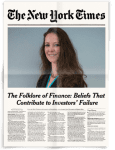
When most people think of folklore, they think of ancient stories passed down through the ages. The tales may be instructive, amusing or both, but few take them as entirely true. Still, they represent an oral tradition that once helped people make sense of the world.

After a nearly two-year study that aimed to answer the question, What does true investment success look like?, Suzanne Duncan, global head of research at State Street’s Center for Applied Research, and her team found that the way individual and professional investors made investment decisions was so skewed that achieving both high returns and long-term objectives was nearly impossible.

They came up with a label for the beliefs that contributed to this failure: the folklore of finance. The study, to be released on Monday, found that people were overconfident in their investing ability, unable to focus on their stated long-term goals when distracted by short-term noise in the markets, and had come to distrust their advisers and lose interest in receiving professional investing help. It also found that changing these behaviors in individual and professional investors was going to be very difficult.

The study begins by trying to explain two very real disconnects in investing.

The first is part of the debate over skill versus luck in investing. Investors generally seek returns that beat a benchmark, known as alpha in financial jargon. But the reality is that alpha barely exists today — at least alpha that is achieved through skill and not luck.

In 1990, 14 percent of domestic equity mutual funds achieved “true” alpha — which was defined in a University of Maryland study as alpha that was not achieved by chance. In 2006, the number of funds delivering true alpha was down to 0.6 percent, which is statistically equivalent to zero. Five times as many funds operated in 2006 as in 1990.

Investors are not oblivious to the difficulty. Only 53 percent of individuals say they believe alpha is attainable by skill, while even fewer professionals, only 42 percent, attribute any performance above the benchmark to skill.

Why this has happened is a paradox of our age: Investors have both greater skill and more information to make outstanding performance more challenging. (The study includes an online quiz to test investing expertise). Think of it as standing up at a baseball game. If you do it alone, you have a better view. If everyone stands, only the tallest have a chance of seeing better than if everyone was still seated.

Yet the financial industry continues to search for alpha as if it were a great white whale. The study found that financial services firms spent 60 percent of their capital expenditures on resources to help generate short-term high performance. It is not for nothing: Active, as opposed to passive, money managers received $600 billion in fees in 2014, according to estimates State Street made from Boston Consulting Group’s Global Asset Management 2014 report. That amount is nearly equal to the gross domestic product of Switzerland.

The solution to the mostly futile quest for alpha, though, is not to switch to being a passive investor alone — which would mean investing in index-tracking funds that would return whatever the index returned, for a very low fee. Ms. Duncan called that reaction too simplistic. She advocated for a system at firm that would challenge broadly accepted, herdlike opinions.

What should be more achievable is setting a financial goal and meeting it, but the study found that this is not happening either. Individuals failing to stick to their plan is nothing new, but in some cases individual investors do not even understand what the plan is: 73 percent of respondents to a State Street survey said they invested with long-term goals in mind, including retiring comfortably and leaving an inheritance, but only 12 percent of those investors said they were confident they were prepared to meet those goals.

“Investors are very short-term-oriented in the sense of how the markets are performing,” Ms. Duncan said. “It’s all relative returns. That takes away from their ability to stay the course.”

In other words, if investors could focus on their long-term goals and understand that it is not going to be a straight line to get there, they would have a greater chance of achieving those goals. The study, of course, is not the first to look at these problems. The field of behavioral finance dates back to the 1970s. But the problems of chasing returns and failing to stick to the investment plan are attracting more attention. And the solution is often advisers who can spend more time finding out what their clients want to achieve and less on moving them among investments.

“It’s not very hard to help individuals realize what they want to do,” said Charles D. Ellis, founder of Greenwich Associates and a former chairman of Yale University’s investment committee. “It does take some time. You have to ask questions and find the answers that are acceptable.”

These go beyond return expectations, Mr. Ellis pointed out. They go to the core of person’s financial history, from how their parents fared financially to what they want their own money to accomplish.

The State Street study does not pull any punches in blaming the investment management industry for the pickle investors are in. It criticizes investment managers and advisers who are focused on short-term gains as a way of proving their worth. Fifty-four percent of institutional investors said they feared they could lose their job if they underperformed for only 18 months; 45 percent of people managing money at asset management firms said they felt the same.

“Career risk is much more profound than we anticipated,” Ms. Duncan said. “It’s difficult to change because it’s very much embedded in everything. It’s the culture, the fee structure, it’s based on assets under management, and they’re rewarded for this.”

Investors are starting to wise up to this game. A 2012 State Street study found that 65 percent of investors did not feel much loyalty to their investment adviser, while 93 percent of respondents to another State Street survey said they believed they would be better off investing on their own. After all, a CFA Institute study found that investors trusted the financial services industry less than they did the telecommunication, automotive, pharmaceutical and technology industries.

But investors’ taking investment decisions into their own hands has not proved to be the solution either.

The study found they look to markers like past performance or how others are doing to measure their own investment success, a false comfort in the study’s parlance. Only 29 percent of investors defined investing success as reaching their long-term goals; most preferred short-term markers, like their portfolio’s return versus that of a benchmark.

Another disconnect revolves around time. Investors want to invest with a long time horizon yet react to short-term swings that derail the strategy. Think of investment return markers, like one, three and five years — hardly the time needed to get people from their first job to retirement.

Yet these are at least conscious acts. People under the sway of what the study called the folklore of knowledge do not even realize how overconfidence, to take one example, is hurting their investment decisions.

“Are these myths? No, myths mean false,” Ms. Duncan said.

More to blame is people’s over-reliance on measures like mutual fund performance ratings, she said. “Morningstar gives us false comfort,” she said. “There’s some truth to Morningstar’s ratings. But there is untruth. Dart-throwing monkeys outperform market-cap-weighted indices.”

So what is to be done to change this?

One way the report suggests is to think of decision making — and the biases that derail it — as a boomerang. At the curved section of the boomerang, the study pointed to the most desired behaviors that professional investors and advisers could get their clients to embrace: an effective decision-making process, a realistic self-assessment, a tolerance for pain and goal ranking.

The clients would, ideally, avoid focusing on past performance, traditional benchmarks and looking to external sources of validation, like comparing your returns to your friend’s.

If advisers are going to help achieve those behavioral changes, they need to check in regularly with clients. “They need to make sure that their clients are on track with their long-term goals — something that could be difficult to do if advisers can’t correct their own behavioral biases,” Ms. Duncan said.

“We avoid seeing behavioral problems because it’s hard and painful,” she said. “One of our recommendations is to have a healthy pain tolerance.”

How To Find Out What You’re Paying For Your Retirement Account

Thanks to a recent Internal Revenue Service ruling, eligible employees can now move after-tax contributions directly from their employer-sponsored retirement plan to a Roth account. The catch: They have to do it at the same time they roll their existing 401(k) pretax savings into a traditional IRA.

The potential tax savings are huge, depending on an investor’s tax rate in retirement.

Money in a Roth IRA grows tax-free and isn’t taxed when it is withdrawn, and Roth IRA withdrawals don’t raise an investor’s adjusted gross income. That, in turn, can help lower Medicare premiums or the 3.8% surtax on net investment income.

The IRS’s decision helps high-income people funnel potentially significant amounts of money directly into a Roth. Normally, couples with adjusted gross incomes of $191,000 or more and individuals with incomes of $129,000 or more can’t directly contribute to a Roth IRA.

Most contributions to a company-sponsored plan are made with pretax money. That reduces a worker’s current tax bill, but withdrawals in retirement are taxed as ordinary income, at rates up to 39.6%. Such withdrawals could push an IRA owner into a higher tax bracket.

Once a retiree hits age 70½, when required minimum distributions from retirement savings kick in, the advantages of Roth IRAs become even more clear. Roths don’t have required minimum distributions, while other savings do, and Roth withdrawals don’t run the risk of pushing a person into a higher tax bracket because they don’t count as income.

“Once you have money in a Roth, it’s like money that’s home-free from taxes,” says Mitch Tuchman, the managing director of Rebalance, an investment-advisory firm based in Palo Alto, Calif.

The new rules—which also apply to nonprofit-sponsored 403(b) plans—are supposed to go into effect next year, but the IRS said in September that investors could start making the transfers now.

The IRS’s announcement means that savers no longer have to follow complicated strategies to reduce their tax hit when moving money from a company plan to a Roth IRA. It also means that people whose incomes are too high for them to fund a Roth IRA now have a new way to do just that.

After-tax contributions to a workplace 401(k) can be shifted into a tax-free Roth account, the IRS says.

The annual limit on pretax contributions to 401(k) plans is $17,500 for individuals under 50, and $23,000 for those 50 and older. Those limits will rise to $18,000 and $24,000, respectively, next year.

Savers who want to take advantage of the new rule must first contribute the maximum pretax amount to their 401(k) or similar plan. In addition, the plan must allow contributions of after-tax funds.

The total amount a worker can save annually in such accounts—including pretax contributions, pretax employer matches and after-tax contributions—is $52,000 ($57,500 for workers 50 and over). The added after-tax dollars allow them to accumulate far greater savings that can be eligible for Roth conversion at retirement.

“If you have a high income and you’re looking for a place to shelter more dollars and you’ve already maxed out everything, this is a great option,” says Michael Kitces, the director of research at Pinnacle Advisory Group in Columbia, Md.

After-tax contributions to company retirement plans were more common in the 1980s and 1990s, when annual 401(k) pretax contribution limits were lower, Mr. Kitces says.

Employees who contributed after-tax funds and are reaching retirement age now could have large accumulated sums of after-tax contributions sitting in their accounts, he adds.

Even now, after-tax contributions—if allowed by the plan—could make sense for people who have extra cash they won’t need until they are 59½ or those who have unique or low-cost investment options in their company plans, experts say.

The latest decision gives people an easier way to distinguish pre- and after-tax contributions and maximize their potential tax savings, making it much easier to move tens or hundreds of thousands of dollars they have had accumulating in their 401(k)s into a Roth IRA with no tax bite.

How To Find Out What You’re Paying For Your Retirement Account

A few months ago I reported on a study showing that found people who get advice regarding their 401(k) plans are better savers.

Not only did they save more in their 401(k) plans, but they had a better idea of how much they should save before their last day of work, the Natixis study found. There was, however, one major hold-up: Many people surveyed said they did not seek financial advice when it comes to retirement savings. Most also did not use the tools and calculators offered by their plan providers.

Some of this is due to inertia. People love to procrastinate when it comes to financial decisions. But readers who weighed in suggested it’s also difficult to know where to start. Where should people go to get solid advice when it comes to their 401(k)s and other retirement accounts?

They’re probably not getting it at the office. For many people, a workplace retirement account will be the primary source of income once they are ready to stop working. But employers are not rushing to give workers financial advice. In fact, many would prefer to hand off those responsibilities to a third party as a way to limit their responsibility, says Mitch Tuchman, managing director of Rebalance, a company that manages retirement investments.

So where to go for advice?

Exhaust do-it-yourself options. Many 401(k) providers, such as Vanguard, Fidelity and T. Rowe Price, offer online tools that help people figure out just how much they’ll save at their current pace and if that will be enough. “The first step is just being aware that these things are available,” says Ed Farrington, executive vice president for retirement for Natixis. Vanguard, for instance, has a tool that estimates and compares how much income a person will need in retirement and how much income they’ll have after factoring in current savings, Social Security and any pension income that’s expected. (If there is a wide gap between the two figures, workers can get a sense of how much more they need to save.)

The company also offers a tool that shows people how much their money would grow if they increased their savings rate by one percentage point or two percentage points each year. These calculators can help people answer one basic question: Am I saving enough? And they may offer a wake-up call for those who haven’t paused to think about how much they’ll end up with later.

Savers can often connect with someone online or over the phone who can help them understand how a fund or investment option works, what the historical performance has been like and what fees are required. But some people may need more guidance when it comes to assessing their investment strategy and if they’re being too aggressive, or not aggressive enough, with their allocation.

Check out third-party services. When it comes to investing decisions, people who don’t have the time or the expertise to devise a strategy — and stick to it– often turn to options such as target-date funds, which adjust automatically and are designed to become more conservative as a person approaches retirement. But people who want a more personal approach, or who want to be more hands-on with their retirement account, can pay an investment advisory firm to come up with a target portfolio.

For a flat fee of a few hundred dollars, Smart401k will ask about goals, income and risk tolerance and then make an investment plan using the options available in the person’s retirement account. It’s up to the saver, however, to follow through and invest according to the plan. Financial Engines offers similar advice online at no cost for investors who want to handle their own investments, but will charge a fee to manage the money directly. Rebalance offers a service where it will manage investments for people who have at least $100,000 in an individual retirement account. (Financial Engines charges a fee ranging from 0.2 percent to 0.6 percent of assets invested to manage accounts. Rebalance charges a fee of 0.5 percent of assets.)

Some firms will offer quarterly reminders encouraging people to re-balance their accounts, or to make sure they’re sticking to the targets set. (After a run-up in the stock market, for instance, some people may find stocks are making up a bigger portion of their original portfolio than originally planned.)

These services can be more customized than what a person can get through a target-date fund. And because the firms receive a flat fee, they aren’t paid to recommend one fund over another. Often, the target portfolios, which can be crafted by a financial adviser or by computer software, are created based on low-cost index funds or exchange-traded funds.

Get face-to-face guidance. Of course, some people will get guidance from a pro, such as a financial adviser or a broker. But as our columnist Barry Ritholtz recently explained, the process of finding the right person requires people to assess not only their goals, but to suss out what standards apply to that professional. There are also differences in how these pros get paid. Registered investment advisers will generally charge a fee that amounts to a percentage of assets under management. Brokers will usually charge a commission.

Those differences may also lead to differences in what advice those pros offer — and that advice that may not always be in your best interest, he cautions. As with the search for any service, people should get recommendations from friends and colleagues. They should also check a person’s credentials, says Catherine McCabe, a senior managing director with TIAA-CREF. “You want to understand the advice that they’re offering and if it’s objective advice,” McCabe says, “so that you’re not being pushed into funds you don’t want to be pushed in to.”

How To Find Out What You’re Paying For Your Retirement Account

The debate about whether you should hire an “active” fund manager who tries to beat the market by buying the best stocks and avoiding the worst—or a “passive” index fund that simply matches the market by holding all the stocks—is over.

So says Charles Ellis, widely regarded as the dean of the investment-management industry.

Stock picking “has seen its day,” he told me this past week, as assets at Vanguard Group, the giant manager of market-tracking index funds, approached $3 trillion for the first time. “With rare exceptions, active management is no longer able to earn its keep.”

If he is right, hordes of portfolio managers will eventually be thrown out of work—and financial advice could end up cheaper, better and more plentiful than ever before.

Mr. Ellis, 76 years old, is revered among money managers. He is the founder of the financial consulting firm Greenwich Associates, a former adviser to Singapore’s sovereign-wealth fund, the author of 16 books and former chairman of Yale University’s investment committee.

In an article in the latest issue of the well-respected Financial Analysts Journal, Mr. Ellis argues that fund managers equipped with sophisticated analytical tools, electronic trading and instantaneous access to news are engaged in an arms race resulting in a kind of mutually assured destruction of outperformance.

The faster and smarter each manager becomes, the more efficient the market gets and the harder it is for any manager to beat it. As a result, he writes, “the money game of outperformance after fees is, for clients, no longer a game worth playing.”

No one gave a hoot about fees in the 1980s and 1990s, when 2% in fund expenses barely made a dent in the 18% average annual returns of U.S. stocks.

But since the beginning of 2000, stocks have returned an average of just 4% annually. A 1% fee is a quarter of that return.

Fees will come down because they have to.

And that, Mr. Ellis warns, will lead to “a wave of creative destruction” comparable to the changes that swept through the steel industry decades ago.

“Part of me thinks he’s right, part of me doesn’t want him to be right,” says Theodore Aronson, an active manager who oversees $25 billion in institutional assets at AJO in Philadelphia.

Of his firm’s 15 portfolios, most available only to institutions, 14 have beaten their benchmarks since inception, and money continues to flow in. “I don’t think the whole world is going to index,” Mr. Aronson says, “but I’m not sure.”

Humans always have believed in magic and miracles, and investors will probably never stop hoping to find the next Warren Buffett under some rock.

Furthermore, some managers will beat the market, some by skill and many by luck alone, even in today’s hypercompetitive environment. While no one has ever come up with reliable ways of identifying those managers ahead of time, that won’t stop many investors from trying.

So active management won’t disappear entirely.

But index funds and comparable exchange-traded portfolios now account for 28% of total fund assets, up from 9% in 2000. And no wonder. Over the past one, three, five and 10 years, only one-fourth to one-third of all stock funds have beaten the index for their category, according to investment researcher Morningstar.

Meanwhile, index funds effectively match the returns of those market benchmarks at fees that often run only one-tenth of those of active funds.

Skeptics have pointed out that if individual investors—those Wrong-Way Corrigans of the financial world—are rushing into passive funds, then active funds might be due for a resurgence. Others cite the financial analyst Benjamin Graham: “There are no dependable ways of making money easily and quickly, either in Wall Street or anywhere else.”

But the net supply of outperformance always is zero; one fund manager can beat the market only at the expense of another who must lag behind it. And owning index funds is neither easy nor quick: You must give up all hope of ever beating the market, resign yourself to a stupefyingly boring portfolio and wait years for the advantages of the cost savings to pile up.

So there isn’t any reason—other than human nature—for investors not to put all their money into index funds. Or, if you like, reserve a tiny fraction for managers who are so active that they thumb their noses at market benchmarks.

To Mr. Ellis, the future for many portfolio managers is clear: “Lots of them are going to have to go find something else to do, because the line of work they originally trained for will be fading away.”

One obvious destination, he says, is financial planning. Tens of millions of Americans need a financial adviser, but only a few hundred thousand advisers are available—many of whom aren’t investing experts. Who better to fill the insatiable demand for financial advisers than former portfolio managers who know firsthand how hard it is to beat the market?

This way, Mr. Ellis says, “investors will get better, more-valuable service from smarter people.” In short, many stock pickers should get out of the business of managing investments and get into the business of managing investors.

Corrections & Amplifications: Charles Ellis is a former director of Vanguard Group. This column failed to note his prior connection to Vanguard.

How To Find Out What You’re Paying For Your Retirement Account

Q: How can I find out how much I am paying in fees in my 401(k) retirement plan?

A: It’s an important question to ask, and finding an answer should be a lot easier than it is right now. Studies show that high costs lead to worse performance for investors. So minimizing your expenses is one of the best ways to improve returns and reach your retirement goals.

Yet most people don’t pay attention to fees in their retirement plans—in fact, many don’t even realize they’re paying them. Nearly half of full-time employed Baby Boomers believe they pay zero investment costs in their retirement accounts, while 19% think their fees are less than 0.5%, according to a new survey by investment firm Rebalance.

Truth is, everyone who has a 401(k), or an IRA, pays fees. The average 401(k) investor has 1.5% each year deducted from his or her account for various fees. But those expenses vary widely. If you work for a large company, which can spread costs over thousands of employees, you’ll likely pay just 1% or less. Smaller 401(k) plans, those with only a few hundred employees, tend to cost more—2.5% on average and as much as 3.86%.

A percentage point or two in fees may appear trivial, but the impact is huge. “Over time, these seemingly small fees will compound and can easily consume one-third of investment returns,” says Mitch Tuchman, managing director of Rebalance.

Translated into dollars, the numbers can be eye-opening. Consider this analysis by the Center for American Progress: a 401(k) investor earning a median $30,000 income, and who paid fund fees of just 0.25%, would accumulate $476,745 over a 40-year career. (That’s assuming a 10% savings rate and 6.8% average annual return.) But if that worker who paid 1.3% in fees, the nest egg would grow to only $380,649. To reach the same $476,745 nest egg, that worker would have to stay on the job four more years.

To help investors understand 401(k) costs, a U.S. Labor Department ruling in 2012 required 401(k) plan providers to disclose fees annually to participants—you should see that information in your statements. Still, even with these new rules, understanding the different categories of expenses can be difficult. You will typically be charged for fund management, record-keeping, as well as administrative and brokerage services. You can find more information on 401(k) fees here and here.

By contrast, if you’ve got an IRA invested directly with a no-load fund company, deciphering fees is fairly straightforward—you will pay a management expense and possibly an administrative charge. But if your IRA is invested with a broker or financial planner, you may be paying additional layers of costs for their services. “The disclosures can be made in fine print,” says Tuchman. “It’s not like you get an email clearly spelling it all out.”

To find out exactly what you’re paying, your first step is to check your fund or 401(k) plan’s website—the best-run companies will post clear fee information. But if you can’t find those disclosures, or if they don’t tell you what you want to know, you’ll have to ask. Those investing in a 401(k) can check with the human resources department. If you have an IRA, call the fund company or talk to your advisor. At Rebalance, you can download templates that cover the specific questions to ask about your retirement account costs.

If your 401(k) charges more than you would like, you can minimize fees by opting for the lowest-cost funds available—typically index funds, which tend to be less expensive than actively managed funds. And if your IRA is too pricey, move it elsewhere. “You may not be able to control the markets but you do have some control over what you pay to invest,” says Tuchman. “That can make a big difference over time.”

download the templates here:

www.rebalance-ira.com/401k-ira-fees

Nearly Half of Americans Surveyed Falsely Think They Pay Zero Retirement Investment Fees

Palo Alto, CA – National poll of baby boomers reveals widespread misconceptions about investment account fees.

A new survey commissioned by investment advisory firm Rebalance finds that many full-time employed baby boomers do not have a clear understanding of the fees they are paying in their accounts. When asked what they pay in investment account fees, 46 percent believed that they do not pay any fees at all. A further 19 percent suggest that their fees are less than 0.5 percent. Only 4 percent of those surveyed believe they pay over 2 percent in account fees.

In fact, everyone who has a savings account, such as 401(k) or IRA, pays fees. According to a recent 401(k) Averages Book, the average employee had various fees of 1.5 percent each year deducted from his or her 401(k) account. Smaller plans with the highest fees averaged nearly 2.5 percent and were as high as 3.86 percent.

Rebalance’s survey of 1,165 full-time employed Americans aged 50-68 suggests that, despite a rule by the Department of Labor that went into effect in 2012 requiring plan sponsors to provide greater transparency about fees, there remains a great deal of confusion among consumers.

“These fees are not trivial. Over time, these seemingly small fees will compound and can easily consume one third of investment returns, yet a lot of people don’t believe that this problem applies to them,” says Mitch Tuchman, Managing Director of Rebalance, which charges a 0.5 percent advisory fee and prominently displays this fee on its website and in other materials. “Decades of research show that low fees are the top predictor of investment success. My hope is that those of us on the side of lowering client fees will eventually win out, but these survey results were an eye-opener – consumers clearly have a long way to go.”

Professor Burton Malkiel, author of the classic investing book A Random Walk Down Wall Street and member of Rebalance’s Investment Committee, agrees. “Fee obfuscation has been around as long as there have been fees, and this survey is proof that the industry is still winning the battle,” says Malkiel. “I do believe we are seeing more options out there for people who want lower fees and better service. The trick now is to make people realize the truth of what they’re really paying because I can guarantee that whatever it is, it’s not nothing, and it is likely to be substantial.”

For those who need help figuring out exactly what they pay in investment account fees, Rebalance has template emails available on its website: http://www.rebalance360.com/dearadvisor

Investment Returns, Anxiety Levels and Other Survey Findings

  • Respondents stated an average return in 2013 of 5.2 percent but the target benchmark indexes were up 9.5 percent, meaning their investments underperformed by 4.3 percent. Yet more than half of respondents, 55 percent, reported that they were satisfied with their returns.
  • Twenty-eight percent of full-time employed baby boomers surveyed are not actively saving.
  • Two-thirds (66 percent) of respondents describe themselves as either very anxious or somewhat anxious about their readiness to retire with enough money.
  • Twenty percent of those surveyed did not know what percentage of their portfolio is currently in stocks or stock funds.
  • Forty-four percent of those surveyed said that if they could go back in time, they would learn more about investing. Sixty-seven percent said they would contribute more to their accounts.

Survey Methodology
This online survey of 1,165 U.S. adults, aged 50-68 and working full-time, was commissioned by Rebalance and conducted by AYTM.com. The survey has a 3 percent margin of error and a 95 percent confidence level. All data is self-reported by study participants and is not verified or validated. Respondents participated in the study between September 12 and September 18, 2014. Detailed findings are available by request.

About Rebalance
Rebalance is the only national investment firm focused on helping mass affluent baby boomers fund their investments by managing client assets with the proven methods of the top professional endowment and pension fund managers. We help our clients retire with more money by growing their savings in the fastest, safest way possible. Rebalance accomplishes this by reducing client fees an average of 52 percent, and combining low-cost, proprietary portfolios with a dedicated investment expert for each client. The Rebalance Investment Committee consists of financial industry luminaries Professor Burton Malkiel, Dr. Charles Ellis and Jay Vivian. For more information, visit www.rebalance360.com.